Eight Families, One Phone Line: When Privacy Was a Luxury Rural America Couldn't Afford
Pick up your smartphone and make a call today, and you're connected through a private, encrypted channel that's yours alone for the duration of the conversation. Hang up, and that connection disappears forever, leaving no trace that the conversation ever happened. For most of American history, this level of communication privacy would have seemed like science fiction.
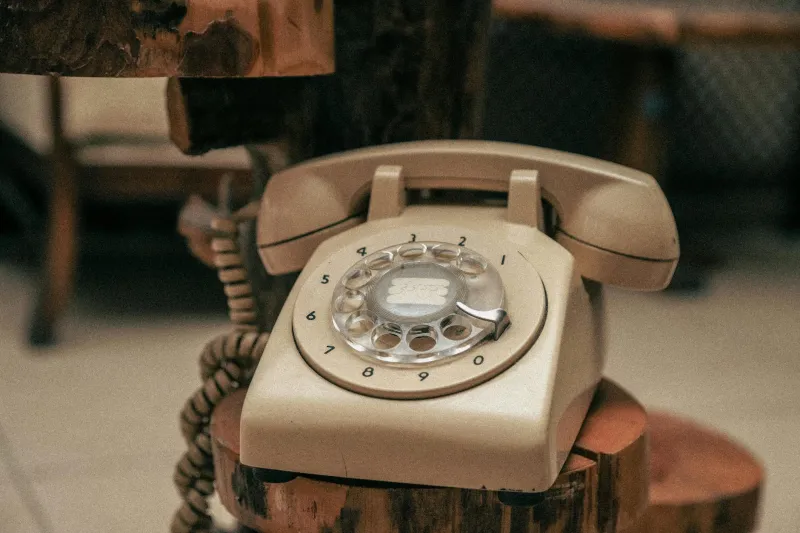
Instead, millions of rural and small-town Americans shared their phone service through party lines—single telephone circuits that connected multiple households, typically between four and eight families, all of whom could listen to anyone else's conversations simply by picking up their receiver.
The Economics of Shared Sound
Party lines weren't a quaint social experiment. They were a practical solution to the enormous cost of stringing individual telephone wires across America's vast rural landscape. Running dedicated lines to every farmhouse and small-town home would have been prohibitively expensive, so telephone companies developed a system where neighbors literally shared the same wire.
Each household received a distinctive ring pattern—two long rings followed by a short one, or three short rings, or some other combination—that identified which family had an incoming call. But here's the thing: everyone on the line heard every ring pattern. And everyone on the line could pick up their phone and listen to any conversation happening between any other households.
This wasn't a technical flaw or an invasion of privacy in the modern sense. It was simply how telephone service worked for a huge portion of America, from the early 1900s well into the 1980s in some rural areas.
The Unwritten Rules of Eavesdropping
Party line etiquette developed its own complex social code. Officially, you were supposed to hang up immediately if you picked up the phone and heard voices that weren't meant for you. In practice, this rule was honored more in the breach than the observance.
Rural communities developed their own informal systems for managing shared phone time. Important calls—medical emergencies, business calls, long-distance conversations—took priority over casual chatter. If someone needed to make an urgent call, they might pick up the phone and politely ask whoever was talking to please finish up soon.
But the temptation to listen in was often irresistible. Party lines became the original social media, offering real-time updates on neighborhood drama, romantic relationships, business dealings, and family disputes. Mrs. Henderson might "accidentally" pick up the phone just as the Johnsons were discussing their son's trouble at school, or Mr. Peterson might find himself overhearing details about the Miller family's financial struggles.
When Everyone Knew Everything
The party line system created a level of community transparency that's almost unimaginable today. Privacy wasn't just rare—it was nearly impossible. Teenage romance, family arguments, medical appointments, job interviews, and personal crises all played out over shared airwaves where the neighbors were always potentially listening.
This forced a different kind of social behavior. People developed coded language for sensitive topics, saved truly private conversations for face-to-face meetings, and learned to assume that anything said over the phone might become neighborhood knowledge by dinnertime.
Some families embraced the communal aspect. Elderly residents used party lines as a form of social connection, checking in on neighbors and sharing local news. During emergencies—house fires, medical crises, severe weather—the party line became a community communication system where everyone could coordinate help and share information instantly.
The Politics of Phone Time
Sharing a phone line also meant sharing phone time, which led to its own social tensions. Teenage daughters who wanted to chat with friends for hours found themselves in conflict with fathers who needed to make business calls. Families with medical emergencies had to interrupt social calls to get access to the line.
Some households became notorious for hogging the line, while others were known for their considerate phone habits. These reputations mattered in small communities where social standing was built on dozens of small interactions and considerations.
The party line also created a primitive form of caller ID. Regular users learned to recognize their neighbors' voices, breathing patterns, and phone habits. You might know that Mrs. Thompson always cleared her throat before speaking, or that the Jenkins family's phone had a distinctive static sound.
The End of an Era
The party line system began disappearing in the 1960s and 1970s as telephone companies invested in infrastructure that could provide individual lines to rural customers. But the transition took decades, and many rural Americans continued using party lines well into the 1980s.
The shift to private lines represented more than just technological progress—it marked a fundamental change in American social expectations about privacy and communication. For the first time in telephone history, what you said over the phone was truly between you and the person you were calling.
What We Lost in the Translation
Modern communication offers privacy, convenience, and instant connection that party line users could never have imagined. We can send encrypted messages, make video calls across continents, and communicate with complete strangers without anyone else listening in.
But the party line era also fostered a different kind of community connection. Neighbors knew each other's voices, shared each other's emergencies, and maintained informal networks of mutual support that extended naturally from their shared communication system.
The loss of party lines coincided with broader changes in American social life—suburban development, increased mobility, the decline of small-town life—that made communities less interconnected overall. Whether party lines were a cause or just a casualty of these changes is hard to say, but their disappearance marked the end of an era when privacy was rare and community oversight was constant.
Today, we carry devices that can connect us instantly to anyone in the world, but we often don't know the names of the people living in the houses next door. The party line system, for all its inconveniences and social complications, created a different kind of connectivity—one where the boundaries between private life and community life were much more permeable.
In an age when we worry about digital privacy and online surveillance, it's worth remembering that for most of telephone history, privacy wasn't something Americans expected from their communications. The party line era reminds us that our current assumptions about private communication are actually quite recent, and quite remarkable, developments in human history.