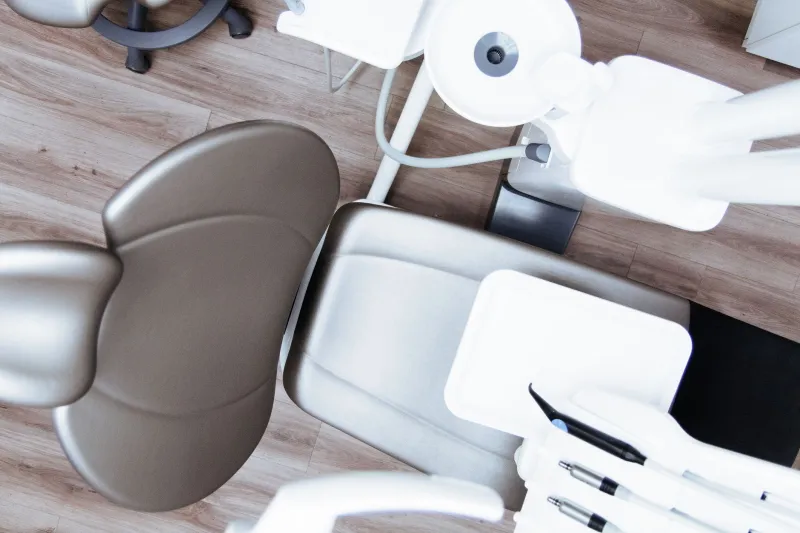
The Lost Art of Killing Time: What Waiting Rooms Once Did for the American Soul

The magazines were always at least three months old. The chairs were always slightly uncomfortable. The television mounted in the corner was always tuned to something nobody would have chosen. And yet, for most of American history, the waiting room was an unavoidable feature of adult life — a place you went, sat, and simply existed until your name was called.
We spent years of our lives in those rooms. And we didn't realize until they started disappearing exactly what they had been doing for us.
A Country That Knew How to Wait
Think about the architecture of patience that ordinary American life once required.
You waited at the doctor's office — not for fifteen minutes while you scrolled your phone, but for an hour or more, with nothing but your own thoughts and whoever happened to be sitting nearby. You waited at the DMV, sometimes half a day, in a room full of strangers all equally resigned to the same fate. You waited at the bank on Friday afternoons, the line stretching toward the door. You waited at the pharmacy while your prescription was filled, sitting on a plastic chair near the greeting cards.
And the waiting didn't end when you left those places. You waited for test results to arrive by mail — sometimes for weeks. You waited for a letter back from someone you'd written to. You waited for the repair shop to call and tell you whether the car was fixable.
Patience wasn't a virtue you cultivated. It was a skill the world trained you in, whether you liked it or not.
What Actually Happened in Those Rooms
Here's what people did while they waited: they talked to strangers.
Not always. Not everyone. But often enough that waiting rooms developed their own quiet social culture. The woman next to you in the doctor's office would mention what she was there for, and you'd mention what you were there for, and somewhere in that exchange a small human connection would form — brief, inconsequential, and yet somehow nourishing in the way that small human connections are.
Waiting rooms were democratic spaces. The CEO sat next to the electrician. The retired schoolteacher sat across from the college student. Whatever separated people outside those walls, inside them everyone was just waiting. That leveling effect wasn't nothing. It was a regular reminder that life's inconveniences didn't sort themselves neatly by income or status.
Children learned to sit still. Not because anyone forced them, but because sitting still was simply what you did. They watched adults being patient. They absorbed the lesson that not everything happens immediately, that some things require endurance, that time passes at its own pace regardless of your preferences.
The Slow Disappearance
The erosion happened gradually, then quickly.
Online banking meant fewer trips to stand in line. Appointment-scheduling apps compressed wait times. Prescription auto-refills eliminated the pharmacy chair. Telehealth appointments made it possible to see a doctor from your couch. Amazon meant you didn't have to wait in any line at all for most of what you needed — it just appeared at your door.
None of these changes were bad. They were, in most measurable ways, improvements. Time is genuinely valuable, and spending less of it sitting under fluorescent lights waiting for your number to be called is objectively better than spending more of it that way.
But something got optimized away in the process. Something that didn't show up on any efficiency spreadsheet.
What Instant Does to a Brain
Researchers who study attention and cognition have noticed something in recent years: people's tolerance for waiting has collapsed dramatically. Studies consistently show that the average person now abandons a webpage that takes more than a few seconds to load. Streaming viewers quit shows within minutes if they're not immediately engaged. The threshold for what counts as an unacceptable delay has dropped to near zero.
This isn't a character flaw. It's conditioning. When every system around you is optimized for immediacy, your brain recalibrates its expectations accordingly. The waiting muscle, like any muscle that doesn't get used, atrophies.
The consequences show up in unexpected places. In the inability to sit through a long conversation without reaching for a phone. In the difficulty of tolerating uncertainty — waiting to hear about a job application, a medical result, a relationship outcome — without filling every moment of the wait with distraction. In the creeping sense that if something isn't resolved immediately, something must be wrong.
We built ourselves a world without friction. And it turns out a certain amount of friction was doing important work.
The Boredom We Needed
Psychologists who study creativity have long noted that boredom — genuine, unstructured, nothing-to-do boredom — is one of the most productive mental states a person can enter. The mind, deprived of external stimulation, turns inward. It wanders. It makes unexpected connections. It processes things that got shoved aside during busier moments.
Waiting rooms were boredom factories. Not pleasant, exactly. But productive in ways that were invisible at the time.
The hour spent sitting in the DMV was an hour when your mind had no choice but to idle. To think about something that had been bothering you. To remember someone you'd been meaning to call. To sit with a feeling you'd been too busy to feel. It wasn't therapy. It wasn't meditation. It was just time — unstructured, unoptimized, and genuinely yours.
That time is gone now. We've replaced it with content. Every pocket of potential boredom has been filled — commutes, checkout lines, the thirty seconds between ordering and paying — with something to watch, read, or scroll. We've eliminated the empty spaces.
And the empty spaces, it turns out, were where a lot of living used to happen.