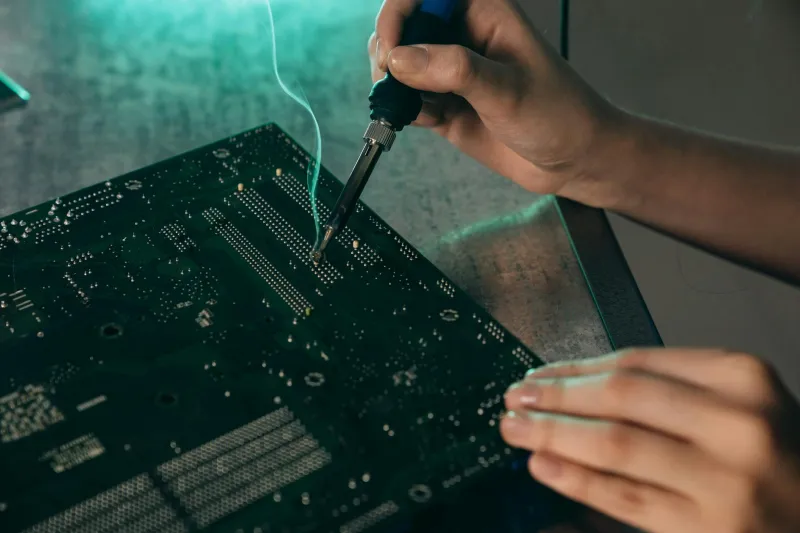
The Saturday Morning Ritual
Every Saturday morning in 1983, Mike's Electronics Repair on Maple Street buzzed with activity. Customers lined up with broken radios, malfunctioning vacuum cleaners, and televisions that had lost their picture. By noon, Mike had diagnosed a dozen problems and promised repairs by Wednesday. His shop was as essential to the neighborhood as the grocery store—maybe more so.
 Photo: Maple Street, via images.squarespace-cdn.com
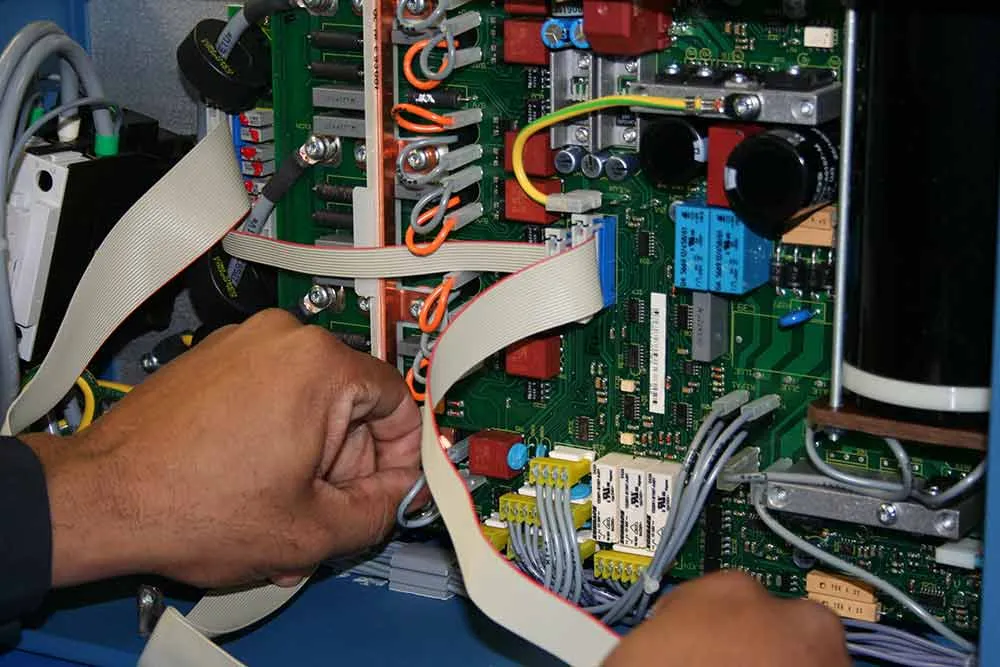 Photo: Mike's Electronics Repair, via www.k-and-s.com
This was America before planned obsolescence became a business model. When something broke, you fixed it. The idea of throwing away a perfectly repairable appliance would have seemed wasteful, even absurd.
Built to Last, Designed to Fix
Appliances from the 1950s through the 1980s were engineered with repair in mind. Manufacturers published detailed service manuals. Parts were standardized and readily available. A Maytag washing machine wasn't just built to last 20 years—it was built so that when something did break, any competent repair person could get it running again.
Refrigerators came with wiring diagrams taped inside. Televisions had removable backs and clearly labeled components. Even complex appliances like dishwashers were designed for disassembly, with parts that could be reached, tested, and replaced without specialized tools.
This wasn't accidental. Companies competed on durability and repairability because customers expected appliances to serve them for decades. A reputation for making unrepairable junk was a business death sentence.
The Neighborhood Expert
Every community had its repair specialists. There was the TV repair guy who could coax life back into any picture tube. The appliance repairman who made house calls with a toolbox full of universal parts. The electronics wizard who could resurrect any radio, no matter how ancient.
These weren't just service providers—they were community fixtures. They knew the quirks of every brand, the common failure points of popular models, and which parts were worth replacing versus which meant it was time to finally upgrade. Their expertise was earned through years of hands-on experience, not corporate training programs.
Customers developed relationships with repair shops that lasted decades. You brought your appliances to the same person who had fixed your parents' equipment. Trust was built over time, and reputation was everything.
The Economics of Fixing
Repair made economic sense for everyone involved. For consumers, fixing a $300 appliance for $50 was obviously preferable to buying a new one. For repair shops, the steady stream of broken appliances provided reliable income. For manufacturers, selling replacement parts generated profit long after the initial sale.
The math was straightforward: quality appliances cost more upfront but delivered value over decades of use and repair. Customers understood this equation and planned accordingly. You bought the best appliance you could afford, knowing it would serve you for 15-20 years with periodic maintenance.
When Throwing Away Became Normal
The shift began gradually in the 1990s. Manufacturing moved overseas, where labor costs made complex assembly economical but repair expensive. Electronics became more sophisticated but less modular. Companies discovered they could increase profits by designing products with shorter lifespans and non-replaceable components.
Suddenly, repair estimates started exceeding replacement costs. "It'll cost $200 to fix this $250 microwave." The economics that had supported repair culture for decades began working against it.
Simultaneously, consumer credit became more accessible, making frequent replacement financially feasible. Why wait three days for a repair when you could buy a new appliance today and pay for it over 12 months?
The Death of Institutional Knowledge
As repair became less economical, the expertise began disappearing. Repair shops closed. Technicians retired without training replacements. The institutional knowledge of how things worked—and how to fix them when they didn't—simply evaporated.
Manufacturers stopped publishing service manuals. Parts became proprietary and expensive. Warranties explicitly voided coverage if anyone other than authorized service centers touched the product. The infrastructure that had supported repair culture was systematically dismantled.
What We Lost When We Stopped Fixing
The death of repair culture cost us more than money, though the financial impact has been enormous. Americans now spend billions annually replacing items that previous generations would have repaired for a fraction of the cost.
We lost valuable skills. The ability to diagnose problems, understand how mechanical and electrical systems work, and think through solutions step by step. These weren't just technical competencies—they were forms of practical intelligence that made people more self-reliant and less dependent on constant consumption.
We lost the satisfaction that comes from rescuing something from the brink of disposal. There was genuine pride in coaxing a few more years out of an aging appliance, in understanding your possessions well enough to maintain them properly.
The Environmental Reckoning
Perhaps most significantly, we lost a relationship with our material world that was inherently sustainable. When repair was normal, consumption was naturally limited. People bought fewer things but kept them longer. Waste was minimal because most items had multiple lives.
The throwaway culture that replaced repair has created environmental consequences that are only now becoming fully apparent. Landfills overflow with appliances that could have been fixed. Rare earth minerals are extracted to manufacture replacements for perfectly functional devices whose only crime was a single failed component.
The Repair Renaissance
Interestingly, repair culture is showing signs of revival. Right-to-repair movements are gaining political traction. YouTube has become a repository of repair knowledge that Mike's Electronics never could have imagined. A new generation is discovering the satisfaction and economics of fixing rather than replacing.
But we're still far from the world where every neighborhood had someone who could fix anything. The infrastructure, expertise, and economic incentives that made repair culture possible took decades to build and were dismantled in less than a generation. Rebuilding them will require more than nostalgia—it will require recognizing that the throwaway society, for all its convenience, has made us poorer in ways that go far beyond money.