Miss Patterson's Impossible Job
Every morning at 8 AM sharp, Miss Patterson rang the bell outside the white clapboard schoolhouse on Elm Street. Twenty-three children, ranging from 6-year-old Tommy who was just learning his letters to 16-year-old Sarah who could recite Shakespeare, would file into a single room with wooden desks, a pot-bellied stove, and one chalkboard.
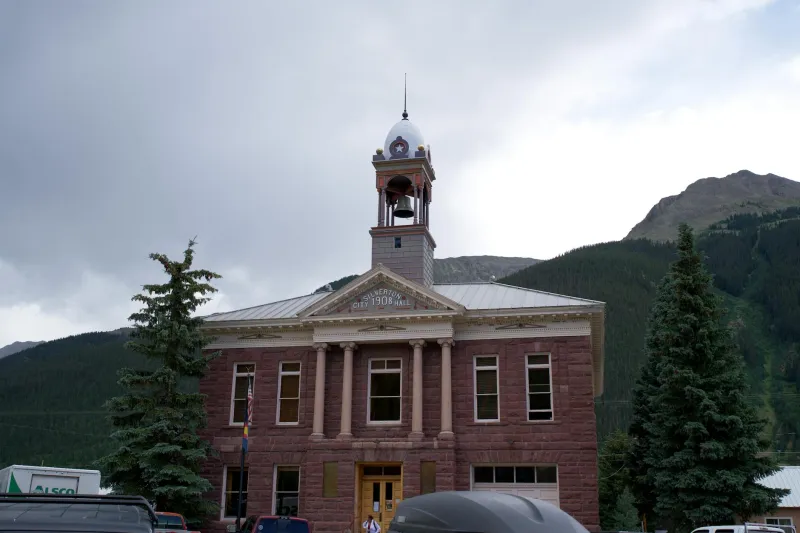
 Photo: Elm Street, via image.tmdb.org
Miss Patterson taught them all. Reading, writing, arithmetic, history, geography, civics, and whatever else needed learning. She was their principal, guidance counselor, nurse, and sometimes their only adult advocate. She made $400 a year—about $4,000 in today's money—and was expected to produce educated citizens ready for adult life.
Impossible? That's what we'd think today. But for over a century, this was how America educated most of its children.
The Classroom Without Grades
There were no grade levels in Miss Patterson's school. Children progressed based on ability, not age. A bright 8-year-old might be reading with the 12-year-olds while struggling with arithmetic alongside the 6-year-olds. A 14-year-old who had missed school to help with harvest might be learning basic multiplication while mastering complex history lessons.
This flexibility created something modern education has largely lost: truly individualized learning. Miss Patterson knew exactly where each child stood in every subject because she taught them all personally. She could spot learning difficulties immediately and adjust her approach for each student.
Assessment was entirely qualitative. No standardized tests, no data points, no percentiles. Miss Patterson simply knew whether Johnny could read well enough to handle the next level of material. She knew whether Mary understood fractions well enough to move on to decimals. Her judgment was the only metric that mattered.
The Curriculum That Fit in One Teacher's Head
Modern elementary schools employ specialists for art, music, physical education, library science, reading intervention, and special education. Miss Patterson handled all of this herself, often with remarkable creativity.
Math lessons used real-world problems from local farms and businesses. Geography came alive through letters from former students who had moved away. History was taught through stories that connected past events to present circumstances. Science meant observing the natural world outside the schoolhouse windows.
Subjects weren't isolated into separate periods. A lesson about the Civil War might include reading primary source documents (English), calculating casualty percentages (math), locating battlefields (geography), and discussing the moral implications (civics). Learning was interconnected in ways that modern departmentalized education struggles to achieve.
The Shocking Results
By today's standards, one-room schoolhouses should have been educational disasters. Undertrained teachers, inadequate resources, mixed-age classes, and no standardized curriculum. Yet the results were often remarkable.
Literacy rates in rural America were surprisingly high. The 1940 census showed that 97% of native-born white Americans could read and write—this in an era when many had attended one-room schools. Civic knowledge was impressive; citizens could name their representatives, explain the Constitution, and participate meaningfully in local government.
Many one-room school graduates went on to successful careers in business, academia, and public service. They had learned not just facts, but how to learn independently, think critically, and adapt to new situations.
The Older Children Were Assistant Teachers
One-room schools operated on a principle modern education has forgotten: children learn by teaching others. Older students routinely helped younger ones with reading and arithmetic. This wasn't just babysitting—it was a sophisticated educational strategy.
When 14-year-old Robert helped 7-year-old Susan with her multiplication tables, both children benefited. Robert reinforced his own understanding while developing leadership skills. Susan received patient, individualized attention from someone who remembered recently learning the same concepts.
This peer teaching created a collaborative rather than competitive environment. Success was measured by the progress of the entire school community, not individual test scores.
When School Truly Reflected Community
The one-room schoolhouse was literally the center of rural community life. It hosted town meetings, church services, social gatherings, and election voting. Parents were deeply involved in school governance—they hired the teacher, maintained the building, and provided supplies.
This integration meant education reflected local values and needs. Children learned skills relevant to their community while gaining the knowledge necessary for broader participation in American society. The curriculum balanced practical skills with academic subjects in ways that prepared students for real-world challenges.
The Machine That Replaced the Teacher
By the 1920s, consolidation began eliminating one-room schools in favor of larger, graded institutions. The new system promised efficiency, specialized instruction, and better resources. In many ways, it delivered.
Modern schools offer opportunities one-room schoolhouses never could: advanced science labs, extensive libraries, diverse extracurricular activities, and specialized support for students with learning differences. Standardized curricula ensure all children receive exposure to essential knowledge and skills.
But something valuable was lost in the process. The intimate, flexible, community-centered approach of one-room schools gave way to an industrial model focused on processing large numbers of students through standardized programs.
The Lesson We Forgot
Miss Patterson's one-room school succeeded because it treated each child as an individual within a community context. Learning was personalized not through technology or data analysis, but through human relationships and flexible expectations.
Modern education reformers spend billions trying to recreate this individualized attention through smaller class sizes, differentiated instruction, and adaptive learning software. Yet we've largely abandoned the peer teaching, mixed-age grouping, and community integration that made one-room schools effective.
The Bell That Still Rings
A few one-room schoolhouses still operate in remote areas of Montana, Wyoming, and Alaska. Visiting one today feels like stepping back in time—until you notice the laptops alongside the slate boards, the internet connection bringing the world into the classroom, and the same individualized attention that Miss Patterson provided a century ago.
These surviving schools remind us that education isn't just about delivering content—it's about creating communities where children learn to think, collaborate, and contribute. Sometimes the most advanced educational approach is the one that remembers what we knew all along: good teaching is about knowing your students and caring about their growth as whole human beings.