The Kitchen Wisdom That Predated Every Label
Mary O'Sullivan raised six children in South Boston during the 1950s and 1960s without ever once checking an expiration date. Not because she was careless about food safety — but because expiration dates didn't exist yet.
 Photo: Mary O'Sullivan, via ednaryan.net.au
 Photo: South Boston, via cdn2.hubspot.net
Instead, she relied on something far more sophisticated: a finely tuned sensory system passed down through generations of Irish-American mothers. She could tell if milk had turned by the sound it made hitting the glass. She knew eggs were fresh by how they sat in water. And she could determine the safety of leftover pot roast with a single, practiced sniff.
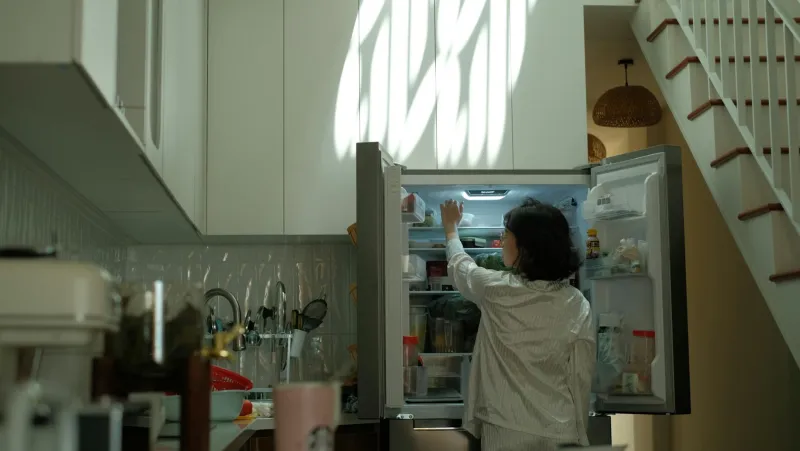
"You learned to trust your nose, your eyes, your fingers," recalls her daughter Patricia, now 71. "My mother could walk into a kitchen and tell you the history of everything in the refrigerator just by looking at it."
 Photo: Patricia, via freenamedesigns.com
This wasn't folk wisdom or old wives' tales. This was a practical, scientific literacy that allowed ordinary Americans to navigate food safety with remarkable accuracy for centuries before the first "Best By" sticker ever appeared on a package.
When Your Grandmother Was a Walking Food Laboratory
The absence of printed dates didn't create chaos in American kitchens — it created expertise. Women (and it was almost always women) developed an encyclopedic knowledge of how different foods aged, spoiled, and signaled their condition.
Milk was evaluated by smell, appearance, and taste. Fresh milk had a clean, slightly sweet aroma and poured smoothly. Milk beginning to turn developed a tangy smell and slightly thicker consistency. Truly sour milk was unmistakable — both in scent and the way it curdled when poured.
Meat evaluation was even more sophisticated. Housewives learned to recognize the difference between the natural aging that improved flavor and the bacterial growth that signaled danger. Fresh meat had a bright red color and firm texture. Meat past its prime developed a grayish tint and slightly slimy surface. Spoiled meat announced itself with an unmistakably putrid odor that required no interpretation.
The Sensory Skills We've Forgotten
Bread was tested by touch — fresh loaves yielded slightly to pressure and sprang back. Stale bread felt firmer and made a hollow sound when tapped. Moldy bread was obvious to the eye, but experienced bakers could often detect the musty smell of developing mold before it became visible.
Fruits and vegetables required the most nuanced evaluation. Apples were checked for soft spots, unusual odors, and the telltale brown flesh that indicated decay. Potatoes were examined for green patches (indicating solanine production) and soft areas that suggested rot. Onions were tested for firmness — fresh onions felt solid and heavy, while aging onions developed soft spots and sprouted green shoots.
Even leftovers were subject to rigorous sensory evaluation. Cooked foods were inspected for changes in color, texture, and smell. Casseroles that had sat too long developed a slightly sour aroma. Gravies and sauces showed signs of spoilage through changes in consistency and the development of surface films.
The Science Behind the Sniff Test
This wasn't guesswork — it was applied microbiology, learned through experience rather than textbooks. The human nose can detect many of the chemical compounds produced by bacterial growth long before food becomes dangerous to consume. Our ancestors were essentially using their sensory organs as sophisticated detection equipment.
The "sniff test" worked because spoilage bacteria produce distinctive volatile compounds as they multiply. Lactobacillus bacteria in souring milk create lactic acid, which produces that characteristic tangy smell. Pseudomonas bacteria in aging meat generate sulfur compounds that create the "off" odors that signal spoilage.
Visual inspection was equally scientific. Color changes in meat often indicate bacterial growth or chemical reactions that affect safety. Mold growth on bread or cheese is immediately visible to the trained eye. The slimy texture that develops on aging vegetables results from bacterial enzymes breaking down cell walls.
When Food Waste Was Actually Wasteful
This sensory-based approach to food safety had an interesting side effect: it minimized food waste in ways that modern date-based systems don't. Experienced cooks knew that many foods remained perfectly safe and nutritious well past their peak freshness.
Sour milk could be used for baking. Slightly stale bread made excellent stuffing or breadcrumbs. Vegetables past their prime could be transformed into soups or stews. Aging cheese often developed more complex flavors that enhanced cooking.
The key was understanding the difference between foods that had lost optimal quality and foods that had become unsafe. This distinction required knowledge and experience that was passed down through families like any other essential life skill.
The Expiration Date Revolution
Printed expiration dates began appearing sporadically in the 1960s but didn't become standard until the 1970s and 1980s. The shift was driven partly by legitimate food safety concerns as food distribution systems became more complex and supply chains grew longer.
But it was also driven by legal liability concerns and consumer demand for convenience. Food manufacturers found it easier to print dates than to educate consumers about sensory evaluation. Retailers preferred the simplicity of date-based rotation systems. And consumers, increasingly removed from food production and preparation, welcomed the apparent certainty that dates provided.
What We Gained and Lost in Translation
The introduction of expiration dates undoubtedly improved food safety in some ways. They provided consistent standards across complex distribution networks. They offered guidance for consumers who lacked traditional food knowledge. And they reduced the risk of foodborne illness in an increasingly urbanized society where many people had lost touch with food production and preservation.
But the shift also created new problems. Many consumers began treating expiration dates as absolute deadlines, discarding perfectly safe food based on printed dates rather than actual condition. Food waste increased dramatically as people lost confidence in their own sensory abilities.
More subtly, we lost a form of practical knowledge that had connected people to their food in intimate ways. Understanding how food ages, spoils, and changes required paying attention to its qualities in ways that reading a date simply doesn't.
The Modern Paradox
Today's food safety system is undeniably more sophisticated than anything previous generations possessed. We understand foodborne pathogens at the molecular level. We have refrigeration systems that maintain precise temperatures. We have packaging that extends shelf life and testing methods that can detect contamination at microscopic levels.
Yet many modern consumers feel less confident about food safety than their grandparents did. Surveys consistently show that people discard enormous quantities of food based solely on expiration dates, even when the food shows no signs of spoilage.
This represents a fundamental shift in how we relate to food — from active evaluation to passive compliance. Instead of using our senses to assess food quality, we've outsourced that judgment to printed dates and manufacturer recommendations.
The Skills We Can Still Learn
The sensory food evaluation skills that sustained previous generations haven't become obsolete — they've simply been forgotten. The human ability to detect spoilage through smell, sight, and touch remains as accurate as ever.
Modern food safety experts increasingly recognize that sensory evaluation should complement, not replace, date-based systems. Teaching people to trust their senses while respecting legitimate safety guidelines could reduce food waste while maintaining safety standards.
Some cooking schools and food safety programs are beginning to incorporate traditional sensory evaluation techniques alongside modern safety protocols. The goal isn't to return to a pre-expiration date world, but to combine the best of both approaches.
When Knowledge Was Power
The generation that fed families without expiration dates possessed a form of practical knowledge that seems almost magical today. They could walk into a kitchen and assess the safety and quality of dozens of food items in minutes, using nothing more than their trained senses.
This wasn't primitive technology — it was sophisticated human expertise applied to a fundamental survival skill. And while printed dates have made food safety more standardized and legally defensible, they've also made us more dependent and arguably less knowledgeable about the food we eat.
In gaining the convenience of expiration dates, we've lost something harder to quantify: the confidence that comes from truly understanding your food, and the intimate knowledge that once connected every American cook to the ancient art of keeping families fed and safe.