How America Stopped Spending Its Paycheck at the Grocery Store — And What We Got Instead
How America Stopped Spending Its Paycheck at the Grocery Store — And What We Got Instead
There's a number that tends to stop people mid-conversation when it comes up: in the early 1950s, the average American household spent roughly 30 percent of its income on food. Today, that figure sits somewhere around 10 percent — and for higher-income households, it's even lower.
That's not a small shift. That's a fundamental rewiring of the American economy, and most of us have never really thought about what caused it or what it cost us.
What a 1950s Grocery Trip Actually Looked Like
Let's start with the physical experience of food shopping in postwar America, because it was genuinely different from anything you'd recognize today.
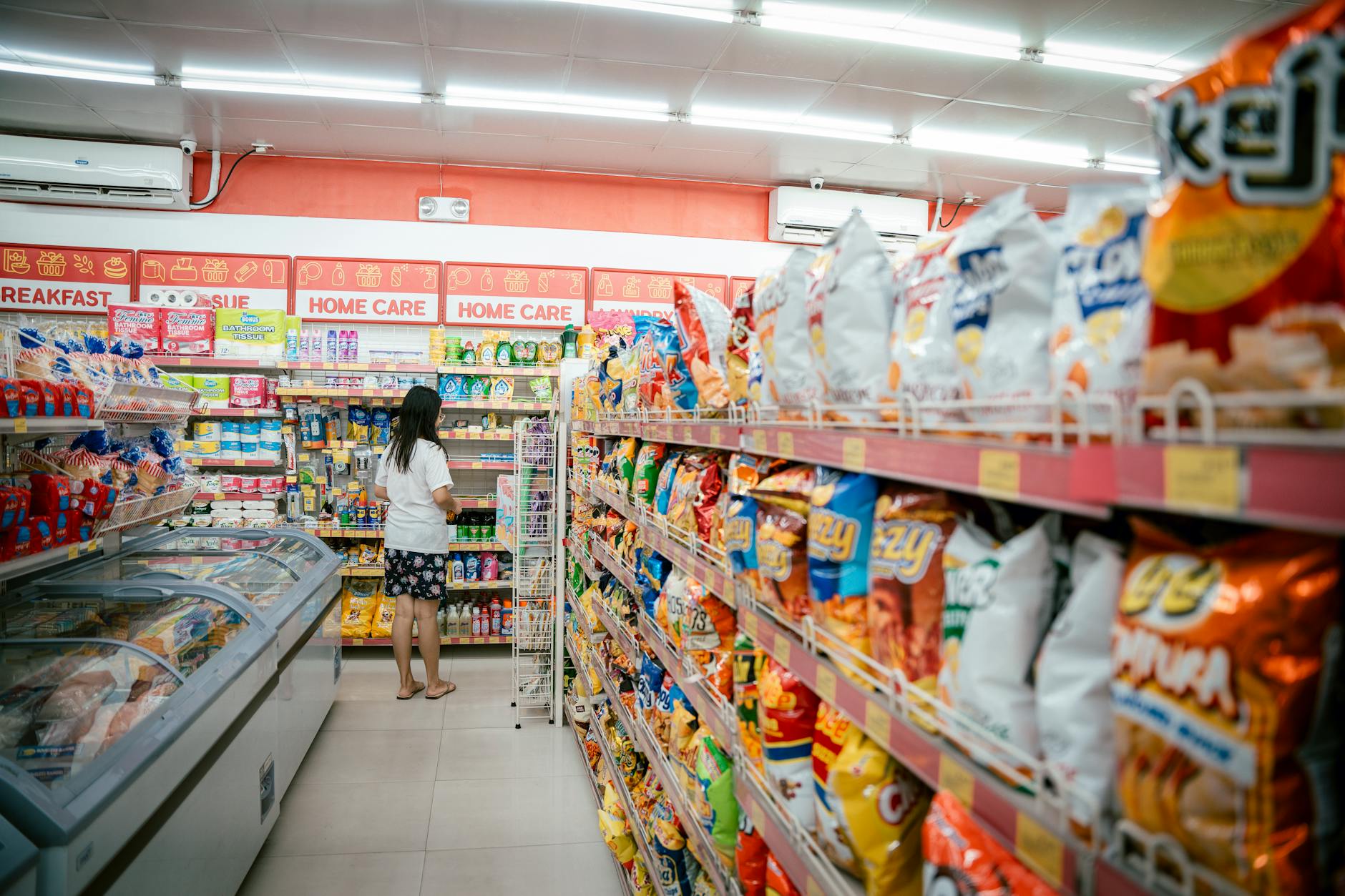
The modern American supermarket — that cathedral of abundance with 40,000 individual products, a sushi counter, and a pharmacy attached — barely existed in 1950. Most Americans still shopped at smaller neighborhood stores with limited selection. Produce was local and seasonal, which meant that what you could buy in January looked nothing like what you could buy in August. Oranges in winter were a luxury. Strawberries in December simply weren't available.
Meat was expensive relative to income, bought in smaller quantities, and stretched across multiple meals. Families ate more dried beans, more preserved foods, more things that could be stored without refrigeration — because home refrigerators, while becoming common, were smaller and less reliable than today's models, and freezers were a genuine novelty.
Cooking from scratch wasn't a lifestyle choice or a weekend hobby. It was a daily necessity. The processed convenience foods that fill modern pantries — the boxed pasta dinners, the frozen entrees, the shelf-stable sauces — either didn't exist or were rare and expensive. Feeding a family meant real labor, most of it performed by women who often weren't working outside the home.
The Machinery That Changed Everything
The collapse in the relative cost of food happened because of several converging forces, and they're worth understanding individually.
Industrial agriculture scaled up dramatically after World War II, applying wartime manufacturing logic to farming. Mechanization reduced the human labor required to grow crops. Chemical fertilizers — developed partly from wartime nitrogen production — dramatically increased yields per acre. Pesticides reduced crop losses. The American farm got bigger, more efficient, and less dependent on human hands.
Refrigeration and cold chain logistics transformed what could be sold where. Once you could reliably keep food cold from farm to truck to warehouse to store to home, the seasonal and geographic limits on food availability essentially disappeared. California strawberries could reach a Chicago supermarket in January. Chilean grapes could sit in a New York produce section in February.
Global supply chains added another layer. When it became cheaper to grow certain crops in other countries and ship them to the US than to grow them domestically, that's what happened. The price of food fell further.
Processed food completed the picture. Once food manufacturers figured out how to engineer shelf-stable, calorie-dense products cheaply — using commodity ingredients like corn, soy, and refined oils — the cost per calorie of eating dropped dramatically. A box of mac and cheese that feeds a family for a dollar is a technological achievement, in its own strange way.
The Trade-Off Nobody Fully Agreed To
Here's where it gets complicated.
Cheaper food freed up an enormous amount of American household income. That money went into housing, cars, education, entertainment, healthcare. The material standard of living for most Americans rose substantially over the second half of the twentieth century, and lower food costs were part of what made that possible.
But the food itself changed in ways that have had serious consequences.
The American diet shifted heavily toward processed foods, refined carbohydrates, added sugars, and industrial seed oils. Rates of obesity, type 2 diabetes, and metabolic disease rose in rough parallel with the industrialization of the food supply. The research connecting ultra-processed food consumption to poor health outcomes has become difficult to ignore.
At the same time, the consolidation of agriculture into large industrial operations came with its own costs — environmental degradation, soil depletion, the decline of small family farms, the concentration of market power in fewer and fewer hands.
The people who grew the food often fared worse too. Agricultural consolidation pushed down wages and eliminated farm jobs. Meatpacking and food processing became some of the most dangerous, lowest-paid work in the country.
So Are We Better Off?
The honest answer is: it depends on who you're asking.
For a middle-income American family in 2025, the abundance available at a modern supermarket would have looked like science fiction to their grandparents. The sheer variety, the year-round availability, the low prices — these are genuinely remarkable achievements.
But the family in 1952 eating home-cooked meals made from whole ingredients — even if those meals were simpler and more repetitive — was probably eating in a way that supported better metabolic health than the average American diet today.
Cheaper food solved a real problem. The solution, though, came bundled with a set of new problems we're still working out how to address. That's often how progress works: it answers one question and quietly raises three more.
Your grocery bill may be lower than your grandparents' was. Whether what's in your cart is actually better for you is a much harder question.