When Getting There Was Half the Ordeal: The Brutal Reality of Early American Road Trips
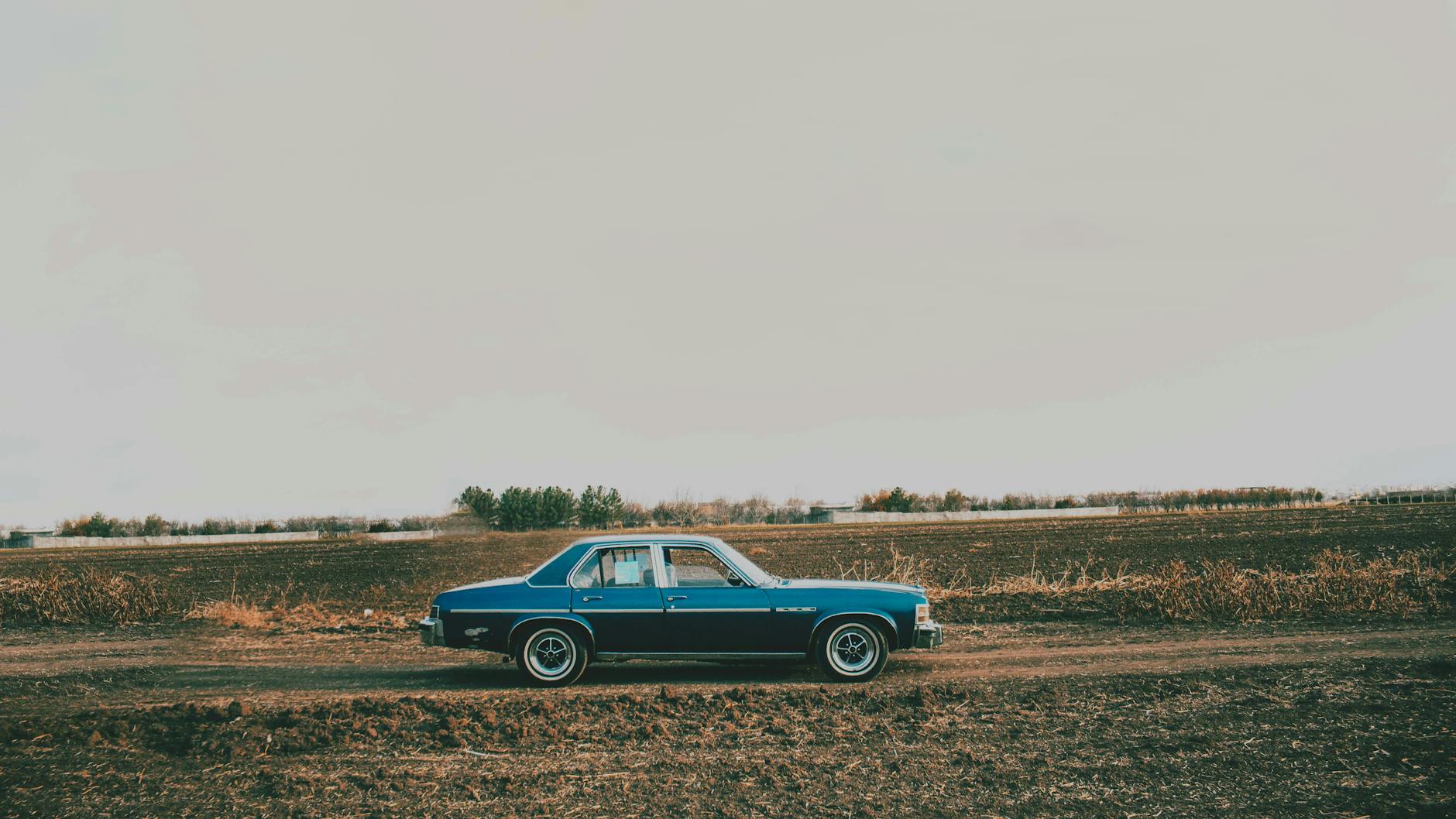
When Getting There Was Half the Ordeal: The Brutal Reality of Early American Road Trips
Picture this: you've just packed your car for a cross-country drive. It's 2025, you've got a full tank, a phone mounted to the dash, and a playlist queued up. New York to Los Angeles will take you roughly 40 hours of drive time — maybe five days if you're taking it easy and stopping to see things along the way.
Now rewind a hundred years. Same journey, same ambition. Completely different world.
In the early 1920s, a cross-country road trip wasn't a vacation. It was closer to a wilderness expedition with a steering wheel attached.
The Road Wasn't Really a Road
The United States in the 1920s had almost no paved highways connecting its coasts. What it had instead was a loose, often contradictory tangle of local roads — some graded gravel, some packed dirt, many just tire tracks worn into fields and farmland. The famous Lincoln Highway, established in 1913 as the first transcontinental route, sounds impressive until you learn that large stretches of it were unpaved well into the late 1920s, and its exact path shifted depending on which local booster organization had lobbied hardest that year.
Maps existed, but trusting them was a gamble. Roads washed out. Signs contradicted each other. Some routes marked on paper simply didn't exist in any meaningful sense once you left a major town. Drivers carried shovels as standard equipment — not for novelty, but because getting stuck in mud or sand was a near-certainty on any long trip.
The average daily mileage for a serious cross-country traveler in the early 1920s was somewhere between 100 and 150 miles on a good day. A bad day — a blown tire, a collapsed bridge, a section of road turned to soup after rain — could mean 40 miles or less. The full New York to Los Angeles journey typically took three to four weeks, assuming nothing went seriously wrong.
What You Had to Bring
Preparing for a cross-country trip in that era looked less like packing a suitcase and more like outfitting a small expedition. Serious travelers carried spare tires — plural, because punctures were constant — along with tire repair kits, extra fuel in cans, a hand pump, chains for muddy roads, rope for towing, and basic mechanical tools. Many brought their own food and camping gear because hotels were sparse and the distances between towns could mean a full day of driving with nowhere to stop.
Gas stations existed, but their distribution was wildly uneven. In the East, you might find one every few miles. In the open stretches of Nevada or the Utah desert, you could go an entire day without seeing one. Drivers wrote ahead to general stores and farms along their planned route, arranging to have fuel waiting for them.
Breakdowns weren't a minor inconvenience — they were a genuine crisis. Cars of the era were mechanically fragile by modern standards, and a serious failure in a remote stretch of road could leave a traveler stranded for days waiting for help that might never come.
The Stretch That Could Kill You
The most feared section of any westbound trip was the desert crossing. Before Route 66 was properly established and before adequate services existed, driving through the Mojave was treated with the same seriousness as a mountain crossing. Travelers were advised to drive at night to avoid the heat, carry multiple water containers, and notify someone of their intended route so a search could be organized if they didn't arrive.
This wasn't overcaution. People died making this crossing. Cars overheated. Drivers got disoriented. The romance of the open road had a genuinely dark edge that modern road trippers simply don't face.
The Same Trip Today
The contrast with a modern cross-country drive is almost difficult to process. The Interstate Highway System — launched in 1956 under Eisenhower, largely completed by the 1990s — created a continuous, well-maintained network of divided highways that makes the old transcontinental routes look like goat paths. I-80 and I-40 offer smooth, consistent travel from coast to coast with gas stations, food, and lodging at reliable intervals throughout.
Modern cars are, by any historical measure, astonishingly reliable. The average American driver goes years without a serious mechanical failure. GPS navigation has made getting lost almost an act of deliberate choice. And if something does go wrong, roadside assistance is a phone call away — a phone you're already carrying for the music.
The New York to Los Angeles drive that took three to four weeks of genuine hardship in 1922 now takes most people four to five days of comfortable cruising, or 40 hours straight if someone's in a hurry.
What the Drift of Time Actually Means Here
There's something worth sitting with in this comparison. The early cross-country drivers — and there were thousands of them, ordinary Americans who made the journey in the 1920s and 1930s — weren't reckless. They were determined. They wanted to see their country badly enough to accept conditions that would make most of us turn around before leaving the state.
The infrastructure we take for granted today — the smooth asphalt, the lit rest stops, the predictable fuel availability — was built over decades of political will, engineering effort, and public investment. It didn't just appear.
Next time you're cruising I-40 through the Arizona desert with the AC on and a podcast playing, it's worth remembering that the person who drove the same stretch a century ago was watching their radiator temperature and rationing their water. Same landscape. Completely different journey.