They Paid Thousands of Dollars for a Computer That Could Barely Do Anything. And They Loved It.
They Paid Thousands of Dollars for a Computer That Could Barely Do Anything. And They Loved It.
Somewhere in America right now, there is a phone sitting face-down on a coffee table that contains more computing power than existed on the entire planet in 1960. It can access virtually all of human knowledge in seconds, navigate you across a continent, translate languages in real time, and generate a passable oil painting of your dog dressed as a Viking.
Its owner is probably ignoring it while watching TV.
This is what happens when technology becomes invisible — when it gets so deeply embedded in daily life that we stop noticing it at all. But to understand how extraordinary that is, it helps to go back to the moment when having a computer at home was so new, so strange, and so without obvious purpose that buying one was essentially an act of faith.
The Machine in the Living Room
The Apple II launched in 1977. The Commodore 64 followed in 1982. These weren't the first home computers — the Altair 8800 and various kit-based machines had preceded them — but they were among the first to arrive in retail stores in a form that ordinary Americans without an engineering degree could theoretically buy and use.
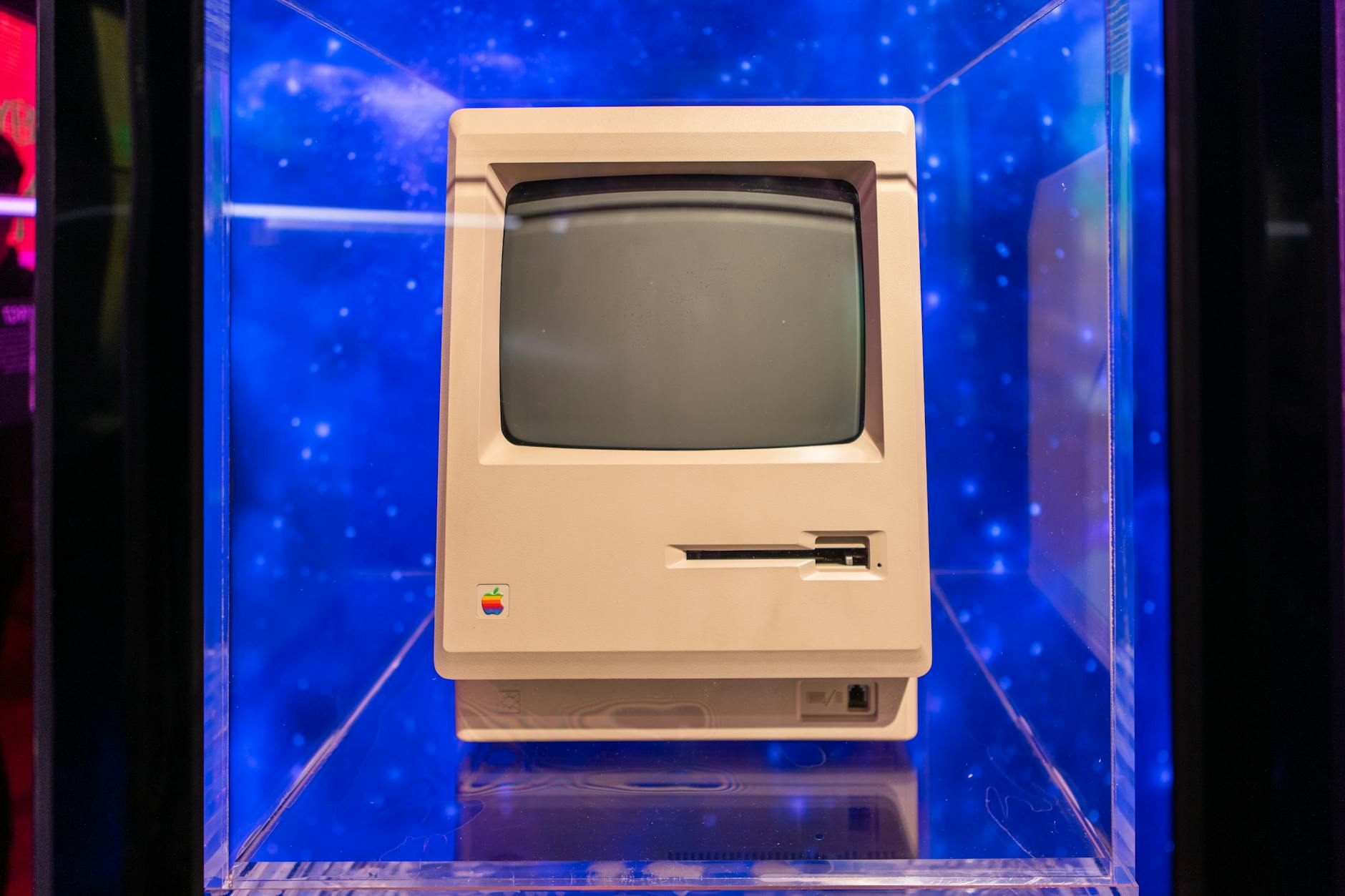
The Apple II retailed at around $1,300 at launch. That's roughly $6,500 in today's dollars. For that price, you got a beige plastic box, a keyboard, and access to a screen that displayed text and simple graphics. No hard drive. No mouse. No internet. Storage was on cassette tape or, if you paid extra, a floppy disk drive that cost nearly as much as the computer itself.
The Commodore 64, cheaper at $595 at launch (still over $1,800 today), sold in enormous numbers through the early 1980s — eventually becoming one of the best-selling personal computer models in history. Millions of American families bought one.
And then, frequently, they sat and wondered what exactly they were supposed to do with it.
The Software Problem
The early home computer experience was defined by a challenge that's almost impossible to relate to now: there was almost nothing to run.
The software ecosystem we take for granted — millions of applications available instantly, free or cheap, downloadable in seconds — didn't exist. Software came on physical media, was sold in physical stores, and the selection was thin. Early buyers who wanted to do something useful with their machine often had to write their own programs in BASIC, a simple programming language that came loaded on most home computers of the era.
This sounds more accessible than it was. Writing even a basic program required working through dense manuals, debugging errors line by line, and accepting that a single misplaced character could cause the whole thing to fail. When you turned the computer off, anything you hadn't saved to tape or disk was gone. The process of saving and loading programs from cassette tape could take ten minutes and fail without warning.
Games existed — and for many families, games were the primary use of the machine. Early titles like Oregon Trail, Zork, and the growing library of Commodore and Apple games were genuinely engaging for their time. But even the best of them would look primitive to a child raised on modern gaming.
What Drove People to Buy Them Anyway
So why did they do it? Why did American families spend the equivalent of thousands of dollars on a machine that couldn't browse the internet (which didn't exist), couldn't stream anything (ditto), and came with almost no software?
Part of the answer is that early adopters sensed, correctly, that something important was happening. The marketing around home computers in the early 1980s was genuinely visionary — and occasionally absurd. Advertisements promised that children who learned computing would have an edge in the future economy. Parents bought Apple IIs the same way they bought encyclopedia sets: as an investment in their kids' futures, even if no one was quite sure how to use them yet.
Part of the answer is also that tinkering with the machine was the point for a significant subset of buyers. The early home computing community was full of people who were genuinely excited about the technology itself — about understanding how it worked, writing their own programs, and sharing code with others through early bulletin board systems and computing clubs. The process was the reward.
And some people just wanted to be first.
From That to This
The distance between a 1982 Commodore 64 and the device in your pocket right now is genuinely hard to quantify in a way that feels real.
The Commodore 64 had 64 kilobytes of RAM. A modern mid-range smartphone has around 8 gigabytes — roughly 125,000 times more. The C64's processor ran at about 1 MHz. A modern phone processor runs at 3,000 MHz or more, across multiple cores. The entire storage capacity of an early home computer could hold less than a single low-resolution photo from a modern smartphone camera.
But raw specs miss something. The more interesting gap is in usability. The early home computer demanded that you meet it where it was — learn its language, tolerate its limitations, invest hours before getting anything useful back. The modern smartphone meets you where you are. It assumes you have no patience and no technical knowledge, and it's right.
The People Who Bought Blind
There's something genuinely admirable about the people who bought those early machines without knowing what they were for. They were purchasing potential — paying real money for a device whose value was almost entirely hypothetical at the time of purchase.
They weren't wrong, as it turned out. The children who grew up with Apple IIs in the house did have an advantage. The tinkerers who learned BASIC went on to build the software industry. The faith those early buyers placed in a beige plastic box on their desk was, in retrospect, spectacularly well-founded.
They just had to sit through a lot of cassette-loading screens first.