Dr. Peterson Made House Calls at 2 AM and Remembered Your Childhood Scars — Medicine Before the Assembly Line
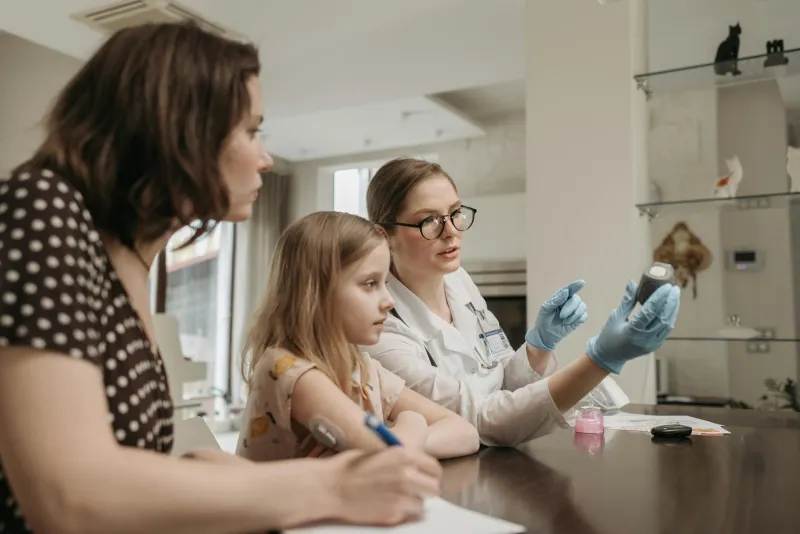
When Your Doctor Was Part of the Family
Dr. Harold Peterson kept a leather-bound ledger in his desk drawer that told the story of entire families across decades. Sarah Mitchell's difficult birth in 1943. Her son Tommy's broken arm from falling out of the oak tree in 1967. Tommy's daughter Emma's first fever in 1991. Three generations of scraped knees, worried mothers, and midnight emergencies—all in the same careful handwriting.
This wasn't unusual. This was medicine in America for most of the 20th century.
Today, that ledger would be a HIPAA violation. Dr. Peterson would be an anachronism. And the idea of one doctor caring for your entire family from cradle to grave? That's become as foreign as making your own butter.
The Doctor Who Answered His Own Phone
In 1960, if you called Dr. Peterson's office after hours, Dr. Peterson answered. Not an answering service. Not a nurse. Not an automated system directing you to the nearest urgent care clinic. The man himself would pick up the phone in his kitchen, still chewing dinner, and listen to Mrs. Henderson describe little Bobby's fever.
"I'll be right over," he'd say, grabbing his black bag.
House calls weren't a luxury service—they were standard practice. Doctors understood that sick children couldn't always make it to the office, that elderly patients shouldn't have to navigate icy sidewalks with pneumonia, that sometimes the best medicine happened in the familiar comfort of someone's living room.
The numbers tell the story: In 1950, house calls accounted for 10% of all doctor-patient interactions. By 1980, that number had dropped to 1%. Today, it's virtually zero outside of concierge medicine for the wealthy.
The Art of Really Knowing a Patient
Dr. Peterson knew that Martha Williams always understated her pain because she grew up during the Depression. He knew that Joe Sullivan's "chest tightness" usually meant work stress, not heart problems. He knew which kids were accident-prone and which mothers were worriers.
This wasn't just bedside manner—it was diagnostic gold. When you've watched someone grow up, when you've treated their parents and their children, you develop an intuitive understanding that no amount of medical technology can replace.
Modern medicine calls this "continuity of care," and study after study shows it leads to better outcomes, fewer unnecessary tests, and higher patient satisfaction. Yet it's become increasingly rare in our current system.
When Appointments Lasted as Long as They Needed To
There was no seven-minute timer ticking in Dr. Peterson's office. If Mrs. Rodriguez needed to cry about her husband's diagnosis, she cried. If teenage Mike needed to work up the courage to ask about that embarrassing rash, Dr. Peterson waited.
Appointments ended when the patient's needs were met, not when the schedule demanded it.
Today, the average primary care appointment lasts 18 minutes. Specialists often see patients for less than 15 minutes. The pressure to see more patients, document everything electronically, and maximize billing has turned medicine into an assembly line where efficiency trumps everything else.
The Quiet Revolution That Changed Everything
The transformation didn't happen overnight. It was driven by genuine improvements: better hospitals, life-saving specialists, incredible new treatments that required focused expertise. Who wouldn't want access to a cardiologist who's performed thousands of heart surgeries instead of a general practitioner who might see one case a year?
Insurance companies pushed the change too, finding it more cost-effective to funnel patients through urgent care clinics and specialists rather than supporting the slower, relationship-based care of family doctors.
Medical schools shifted their focus, training students for specialization rather than comprehensive care. The financial incentives followed: specialists earn significantly more than family practitioners, creating a brain drain from primary care.
What We Gained and What We Lost
Make no mistake—modern medicine performs miracles that Dr. Peterson could never imagine. Cancer survival rates have skyrocketed. Heart attacks are survivable. Premature babies who wouldn't have lasted a day in 1960 grow up to play college football.
But we've lost something profound in the process. We've lost the doctor who knew that your chest pain started the day after your son deployed overseas. We've lost the physician who could spot depression in a handshake, who understood your family's medical history not from a computer screen but from lived experience.
We've traded intimacy for expertise, relationships for efficiency, stories for data points.
The Search for What We've Lost
Interestingly, some patients are trying to buy back what we once took for granted. Concierge medicine—where patients pay annual fees for enhanced access to their doctors—is the fastest-growing segment of primary care. These practices typically limit their patient loads, offer same-day appointments, and yes, sometimes make house calls.
It's telling that we now consider it a luxury to have a doctor who knows your name.
Direct primary care practices are experimenting with subscription models, cutting out insurance companies to focus on the doctor-patient relationship. Some healthcare systems are trying to recreate continuity by assigning patients to consistent care teams.
But these innovations serve a tiny fraction of Americans. Most of us navigate a system where we might see a different provider every visit, where our medical history exists only in electronic fragments, where the idea of calling our doctor at home seems as antiquated as using a rotary phone.
The Drift We Didn't Notice
The most striking thing about this transformation is how little we discussed it as it happened. There was no national debate about whether we wanted to trade family doctors for medical specialists. No vote on whether house calls were worth preserving. The change happened gradually, driven by market forces and technological progress, until one day we woke up in a world where medicine had become fundamentally different.
Dr. Peterson's grandson is a physician now—an orthopedic surgeon who performs incredible procedures his grandfather never dreamed of. But he's never made a house call, never treated three generations of the same family, never answered his own phone after dinner.
Both versions of medicine have their place in the story of human progress. But sometimes, late at night when we're trying to decide if that fever warrants a trip to urgent care, we might find ourselves missing the doctor who would have just come over to take a look.