The Bell That Meant Tuesday: How Mobile Vendors Once Ran Your Neighborhood Like Clockwork
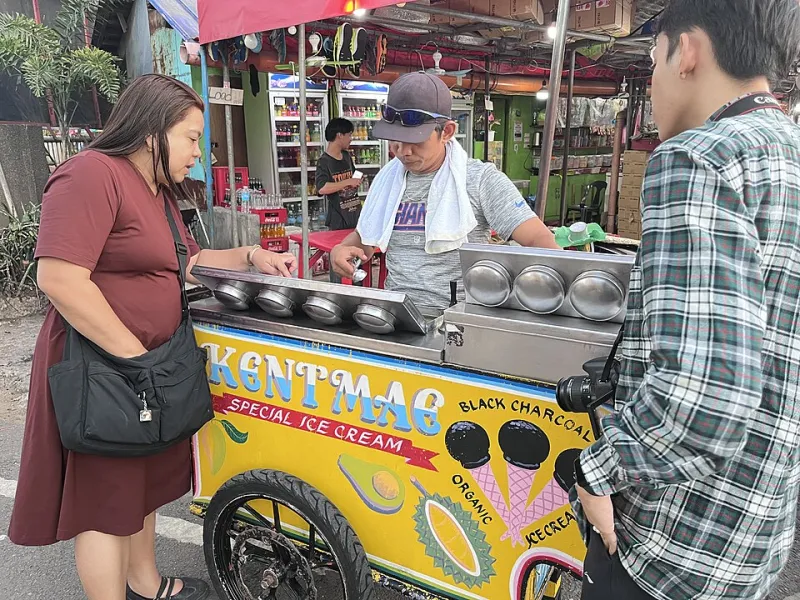
Photo: MadayawDavao, CC BY-SA 4.0, via Wikimedia Commons
If you grew up in an American suburb or city neighborhood in the mid-twentieth century, you learned to listen for certain sounds. The distant jingle of the ice cream truck on a hot afternoon. The distinctive bell of the knife sharpener making his slow way down the block. The rumble of the produce cart on Thursday mornings, when your mother would step off the porch with a canvas bag and come back with tomatoes she'd actually squeezed before buying.
These weren't random appearances. They were scheduled. Predictable. Part of the rhythm of the week in a way that the neighborhood had collectively agreed upon without anyone ever calling a meeting about it. And the people who ran these routes — the vendors who worked the same blocks year after year — were as much a part of the neighborhood's social fabric as anyone who lived there.
A Commerce That Moved to You
The mobile vendor tradition in America has roots that run surprisingly deep. Long before the corner store, itinerant merchants traveled routes through towns and rural communities, selling everything from dry goods to medicine to fresh produce. By the early twentieth century, as American cities grew and neighborhoods became more densely populated, a whole ecosystem of mobile commerce had developed to serve them.
The ice cream truck is the one most people remember — and it's the one that has survived, in diminished form, into the present. But it was just one thread in a much richer tapestry. There were rolling produce carts that brought vegetables directly from the wholesale markets to residential streets. There were vendors who sold fresh-baked bread from the back of a truck, their routes timed so the bread arrived still warm. There were the knife and scissors sharpeners, the rag-and-bone men who bought your old metal and paper, the egg men who delivered weekly to regular customers.
In some cities, this mobile economy was extraordinarily sophisticated. Vendors had established territories. They had regular customers who expected them on specific days, who would wait on their porches for them, who would feel genuinely put out if they ran late. The relationship between a vendor and his route was, in its own way, as stable as any storefront business.
The Transaction That Was Also a Conversation
What made these exchanges different from any modern equivalent wasn't the product — it was the texture of the interaction itself. When the ice cream truck pulled onto your block, it didn't just sell ice cream. It created a brief communal moment. Kids came running from three directions. Mothers leaned out of windows. Neighbors who hadn't spoken all week ended up standing on the sidewalk together while their children deliberated between a Creamsicle and a Fudgsicle.
The vendor at the center of all this wasn't anonymous. He knew which kids always got the same thing. He knew which mothers would come out and which would just send their children with coins. He knew who was good for credit on a slow week. He knew the neighborhood in a granular, personal way that no app has ever replicated and probably never will.
The same was true of the other vendors. The knife sharpener who worked your block for twenty years knew which households had good knives worth maintaining and which were hopeless. The produce man knew your mother preferred smaller tomatoes and would set them aside for her. These weren't just transactions — they were micro-relationships, conducted weekly or monthly over years and decades, that accumulated into something resembling genuine community knowledge.
Why the Routes Disappeared
The decline of mobile vending in American neighborhoods happened for a cluster of reasons that arrived more or less simultaneously in the postwar decades. The rise of the supermarket was probably the biggest single factor. When you could buy produce, bread, dairy, and household staples all in one air-conditioned building, the economics of running a specialized mobile route became harder to justify — both for the vendor and for the customer.
The spread of the automobile changed things too. Once most American families had a car, the calculus of convenience shifted. You weren't dependent on what came to you anymore; you could go get it yourself. The neighborhood stopped being the primary unit of commerce and became instead just the place where you slept.
Zoning regulations and city ordinances also played a role. As American cities became more heavily regulated, the informal territorial arrangements that mobile vendors had operated under for generations became harder to maintain. Permitting requirements, noise ordinances, and competition from established retail interests all made the old routes less viable.
By the 1970s and 80s, most of the old mobile vendor ecosystem had quietly evaporated. The knife sharpener became a rarity. The produce cart became a memory. Even the ice cream truck, the most resilient survivor of the bunch, became increasingly uncommon in many neighborhoods.
What the Delivery App Can't Replicate
It would be easy to draw a straight line from the ice cream truck to DoorDash and call it progress — and in terms of pure efficiency, it is. You can now get almost anything delivered to your door in under an hour, any day of the week, without speaking to a single human being. The selection is vastly greater. The price is often lower. The convenience is unmatched.
But something in the exchange has fundamentally changed. The delivery driver who drops your order on the porch and drives away is not performing the same function as the produce man who knew your mother's preference for small tomatoes. The transaction is complete, but the relationship is absent. There's no accumulation of mutual recognition, no sense that this person is part of the rhythm of your block, no moment where neighbors end up standing on the sidewalk together because the same thing has drawn them all outside at once.
The old mobile vendor economy wasn't just a way of distributing goods. It was infrastructure for community — a series of recurring occasions that gave neighbors a reason to be in the same place at the same time, interacting with the same familiar face. When that infrastructure disappeared, nothing replaced the community function it had been quietly performing.
The Sound of a Neighborhood Knowing Itself
There's a particular kind of neighborhood knowledge that comes from shared routine — from everyone on the block knowing that the ice cream truck comes on Tuesday and Thursday afternoons, that the knife sharpener makes his rounds in early summer, that the bread truck is always a little late on Saturdays. That shared knowledge is a form of belonging. It means you're oriented to the same rhythms as the people around you.
Most American neighborhoods have lost that. The rhythms that remain are private ones — individual delivery notifications, personal grocery orders, customized schedules that don't overlap with anyone else's. The neighborhood is still there, physically. But the shared clock that once made it feel like a community has gone quiet.
Somewhere out there, an ice cream truck is still making its rounds, and kids are still running toward the sound of that jingle. But the world that gave that truck its full meaning — the web of familiar faces, the regular routes, the vendor who knew your name — that world has mostly drifted away.