The Number You Never Knew: Managing Money When the Bank Kept Secrets
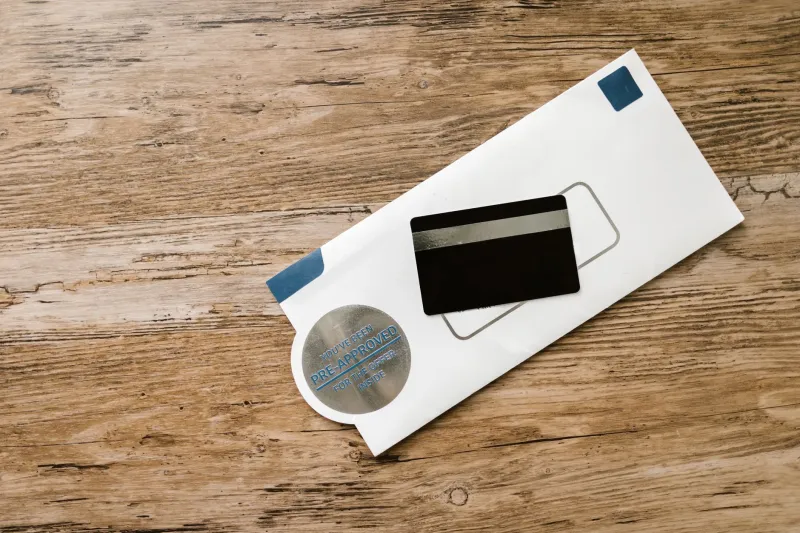
There was a particular kind of dread that came with opening a bank statement in the 1970s or 1980s. Not because anything was necessarily wrong — but because you genuinely had no idea. You'd spent the month writing checks, handing over cash, maybe dipping into savings for something you told yourself was an emergency. And now, finally, the paper arrived to settle the score.
For most of American financial history, this was simply how it worked. Your bank balance wasn't a number you could glance at on your phone between meetings. It was a figure that existed somewhere in the back of your mind, approximated through habit and hope, confirmed only when the statement showed up in the mailbox.
The Monthly Reckoning
Before ATMs became common in the 1980s, and long before online banking arrived in the late 1990s, Americans tracked their money the old-fashioned way: with a checkbook register and a pencil. Every purchase you made by check got logged by hand — the date, the payee, the amount. Subtract as you go. Don't lose the book.
For purchases made in cash, the system was even more analog. You spent what felt reasonable. You kept a rough mental tally. If you were careful, you maintained a small buffer — a cushion of vagueness between what you thought you had and what you actually had, just in case your arithmetic was off.
Once a month, the statement arrived. A physical document, usually a folded sheet tucked inside a windowed envelope, listing every transaction the bank had processed. For many households, this was a genuine event. You sat down at the kitchen table, pulled out the register, and reconciled the two — matching your handwritten entries against the bank's official record.
If the numbers matched, you felt an almost ceremonial satisfaction. If they didn't, you spent the next hour hunting for the discrepancy, backtracking through weeks of purchases like a detective retracing steps.
Living Inside the Gap
What's easy to forget is how much of ordinary financial life happened inside that gap — the three or four weeks between statements when no one, including you, was entirely sure where things stood.
This wasn't recklessness. It was the texture of the era. You built habits around it. You kept spending conservative because you couldn't verify in real time. You thought twice before writing a check you weren't confident about, because there was no quick way to confirm the funds were there. The uncertainty itself was a kind of guardrail.
Families developed their own informal systems. Some kept a running total on a notepad stuck to the refrigerator. Others maintained a mental rule — never let the checkbook register drop below a certain number, no matter what. Couples often divided duties: one person handled the bills, the other handled the groceries, and they synced up at the end of the week over dinner.
The point is that people managed. Not perfectly, and not without the occasional overdraft notice arriving like a small humiliation in the mail. But they managed, and in doing so they developed a relationship with money that was more deliberate, if less precise.
When Transparency Arrived
The shift happened gradually. ATMs offered balance inquiries. Telephone banking let you call in and hear a recorded voice read your current total. Then the internet arrived, and with it the ability to log into your account from a desktop computer and see everything in something close to real time.
By the mid-2000s, online banking was mainstream. By the 2010s, smartphone apps had made your balance as accessible as the weather forecast — something you could check reflexively, without even thinking about it.
The effect on financial awareness was, in theory, transformative. No more guessing. No more waiting. No more reconciling by hand. Every transaction appeared within hours, sometimes minutes. You could see a coffee purchase reflected in your balance before you'd finished drinking it.
What the Clarity Cost
And yet something shifted along with the convenience. Financial anxiety, by most measures, has increased in the smartphone era rather than decreased. Surveys consistently show that Americans stress about money more today than their parents did, despite having infinitely more information available to them.
Part of that is economic — wages, housing costs, student debt. But part of it may be the nature of constant visibility itself. When you can see every transaction in real time, every small purchase becomes a data point in a running judgment of your own habits. The $7 coffee. The $14 lunch. The streaming subscriptions stacking up like quiet accusations.
The old system offered something that sounds almost counterintuitive: a kind of peace in not knowing. Once the statement was reconciled and the month was settled, it was settled. You weren't carrying a live feed of your financial decisions with you everywhere you went.
The Art of Not Knowing
This isn't an argument for going back. Real-time banking catches fraud faster, prevents overdrafts, and gives people genuine control over their money in ways the old system never could. The monthly statement era was also the era of bounced checks and surprise fees and the particular shame of a transaction declined at the grocery store register.
But there's something worth noticing in the contrast. The people who managed money through checkbook registers and monthly envelopes weren't living in financial chaos — they were living with a different relationship to financial knowledge. One that required more trust in their own judgment, more patience, and a willingness to operate without constant confirmation.
In a world where your bank balance refreshes every time you pull down on the screen, that kind of patience feels almost quaint. But so does the particular relief of opening an envelope and finding out you'd done just fine after all.