Fever, Flat Ginger Ale, and the Phone Off the Hook: When Being Sick Actually Meant Stopping
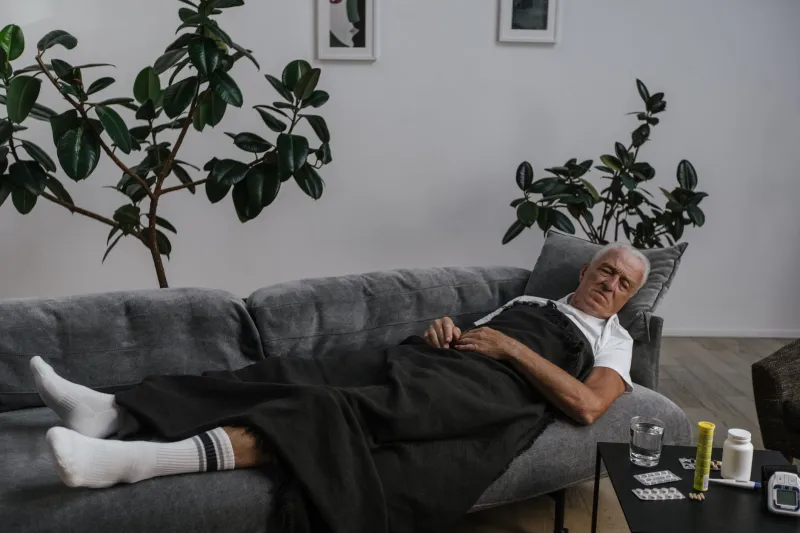
There was a specific texture to being sick as a kid in the 1980s. The couch pulled out into something softer than it had any right to be. The television played game shows at a volume that asked nothing of you. A glass of flat ginger ale sweated on the coffee table. The phone — if it rang at all — was answered by someone else, who told whoever was calling that you were home sick and would be back when you were better.
That was the whole plan. Rest. Recover. Return.
It's worth sitting with how completely that experience has vanished.
The Sick Day as a Complete Absence
For most of the twentieth century, being ill meant being genuinely unreachable. Not as a policy. Not as a luxury. Just as a fact of how communication worked.
If you called in sick to work in 1979, your boss noted it down and moved on. There was no way to forward your calls to the bedroom. There was no inbox silently accumulating while you slept. Your colleagues covered what needed covering, or it waited. The work did not follow you home, because it had no mechanism for doing so.
The same was true for social obligations, school responsibilities, and everything else. Illness created a genuine pause in participation. Doctors — often the family physician who had been treating you for years — prescribed rest with the same authority they prescribed medication. Rest was understood as a medical intervention, not a personal indulgence.
And so people rested. Not because they were lazy or indifferent to their responsibilities, but because the system around them made it possible, and because the cultural understanding of illness included the concept of recovery time as something real and necessary.
The Slow Erosion of Permission to Be Sick
The change didn't arrive all at once. It crept in.
The fax machine made it possible to send documents from home. The pager meant you could be reached anywhere. The BlackBerry, arriving in the early 2000s, put email in your pocket and subtly redefined availability as a professional virtue. Each technological step forward quietly narrowed the acceptable window of disconnection.
By the time the smartphone became universal and remote work became normalized — a process the pandemic dramatically accelerated — the infrastructure for working while sick was not just available but expected. Staying home no longer meant stepping away. It just meant working from a different location, possibly in pajamas, possibly with a 101-degree fever.
The language shifted too. "I'm working from home today — feeling a little under the weather" became a standard formulation, as if the two facts canceled each other out. The sick day became a modified work day. The recovery became a background process running alongside everything else.
What Always-On Does to a Body That's Trying to Heal
This matters more than it might seem.
Sleep and genuine rest are not optional components of recovery — they are how recovery happens. When the immune system is fighting an infection, it needs resources. Cognitive effort, stress hormones, and the low-grade vigilance of monitoring an inbox all draw on those same resources. The body trying to heal while the mind stays engaged is doing two things at once, and doing neither as well as it could.
Primary care physicians have been noting for years that patients are returning to work — or rather, never fully leaving it — before they've actually recovered. Illnesses that once resolved in three days stretch to a week. People who take a genuine sick day feel guilty about it, which produces its own physiological stress response.
There's also the matter of contagion. The cultural pressure to stay productive while sick has, for many workers, translated into showing up in person when they shouldn't. The colleague who came in visibly miserable because they couldn't afford to fall behind — or because the team needed them, or because they'd already used their sick days — has spread more than one office cold through the open floor plan.
The Guilt That Replaced the Ginger Ale
Ask most Americans under fifty how they spend sick days now and the answers are remarkably consistent. They check email first thing. They attend at least one video call. They apologize, in writing, for being slower than usual. They feel vaguely ashamed of the inconvenience their body is causing.
That guilt is new. Or at least, it's new at this scale.
Previous generations certainly had workers who pushed through illness — plenty did, and not all of them had the luxury of rest. But the cultural default was that illness was a legitimate reason to stop. You didn't need to justify it or compensate for it in real time. You were sick. You'd be back.
The ginger ale on the coffee table, the game shows at low volume, the phone answered by someone else — those weren't just comforts. They were a society's acknowledgment that the human body sometimes needs to be left alone to do what it knows how to do.
We traded that acknowledgment for a laptop on the nightstand and a muted microphone.
It's not obvious we got the better end of the deal.