Sitting Still Used to Be Something People Knew How to Do
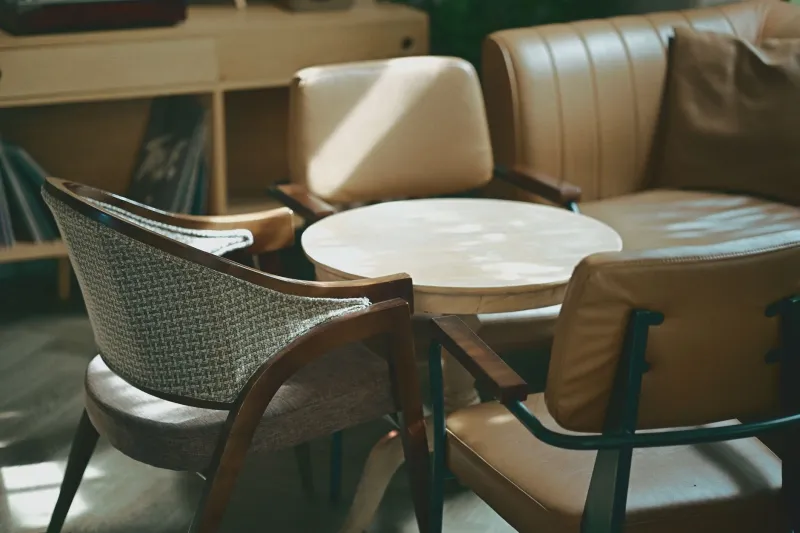
There was a particular ritual to the waiting room. You'd push open a door, find a seat, and scan the side table for something readable. Maybe a six-month-old People magazine. Maybe a local real estate circular. Maybe nothing at all. And then you'd just... sit there. Watching the fish tank. Noticing the way the fluorescent light buzzed. Thinking about whatever your brain decided to think about.
Nobody loved it. But everybody did it. And somewhere in all that mild discomfort, something quiet was happening that we didn't have a name for at the time.
The Art of Killing Time Without Killing Your Attention Span
For most of the twentieth century, boredom was a companion Americans learned to manage rather than escape. Long waits at the DMV, layovers at regional airports, slow Saturday afternoons at the laundromat — these were just facts of life, and people developed genuine strategies to get through them.
Books were the gold standard. A paperback tucked into a purse or jacket pocket was standard operating equipment for anyone who took public transit or visited a doctor with any regularity. Crossword puzzles showed up everywhere — newspapers, dedicated puzzle books sold at drugstore checkout counters, printed pads that people carried specifically for waiting situations. Some folks were championship-level people-watchers, building entire imaginary biographies for strangers across the room.
Airport terminals before the smartphone era were fascinating social ecosystems. People napped across rows of connected seats. They started conversations with strangers that somehow lasted two hours. They stared out floor-to-ceiling windows at taxiing planes and let their minds wander. A 1997 domestic flight delay wasn't a crisis you managed with Instagram — it was dead time you filled with whatever internal resources you happened to have on hand.
The Moment the Phone Ate the Pause
The transition happened faster than most people realize. The original iPhone launched in 2007. By 2012 or so, the waiting room as a meditative space was functionally over. Not because anyone decided to end it, but because the phone made the alternative — sitting with nothing — feel almost unbridictable by comparison.
Today, the average American spends somewhere around four to five hours a day on their phone. A significant chunk of that happens in precisely the spaces that used to be boredom's natural habitat: the doctor's office, the airport gate, the line at the coffee shop, the two minutes between ordering and the food arriving. Every gap has been filled. Every pause has been plugged.
In one sense, that's a genuine improvement. Nobody misses flipping through a 2003 issue of Field & Stream while waiting for a root canal. The ability to use downtime productively — answering emails, catching up on news, video-calling a friend — has real value. Time that used to evaporate now actually goes somewhere.
What Boredom Was Actually Doing for Us
Here's the part that took researchers a while to catch up to: boredom wasn't just an absence of stimulation. It was doing something.
When the brain isn't occupied with a specific task, it shifts into what neuroscientists call the default mode network — a kind of background processing state where we consolidate memories, work through unresolved problems, and generate creative connections between unrelated ideas. The shower epiphany is a classic example. So is the solution that arrives during a long drive. So, it turns out, was the forty-five-minute wait at the pediatrician's office.
Studies from the last decade have shown that people who allow themselves to be bored — genuinely, phone-free bored — demonstrate measurably higher creativity on tasks given immediately afterward. The mind, when left without input, starts rearranging what it already has. That's not a small thing.
There's also something to be said for what people used to notice when they weren't staring at a screen. The woman across the waiting room who looked like she was trying not to cry. The kid in the corner systematically destroying a paper cup. The way afternoon light moved across a linoleum floor. People-watching isn't just entertainment — it's empathy practice. It builds a kind of social attentiveness that's harder to maintain when your eyes are locked on a four-inch rectangle.
The Patience That Doesn't Come Easy Anymore
Ask anyone who works with younger employees today and you'll hear variations of the same observation: the tolerance for slow-moving processes, for ambiguity, for situations that don't resolve quickly, has shifted. That's not a generational character flaw — it's a reasonable adaptation to an environment that has systematically eliminated the need to wait without stimulation since childhood.
If you grew up with a phone in your hand from age ten, you've never really had to develop the muscle. Why would you? The phone was always there.
Older Americans sometimes describe a kind of nostalgic affection for the enforced idleness of their youth — long car trips without screens, summer afternoons with genuinely nothing to do — that sounds almost like describing a lost physical fitness. Something the body used to be capable of that it no longer is.
Reclaiming the Pause
There's a small but growing movement of people who deliberately leave the phone in their pocket during waits. Who bring an actual book to the airport. Who sit in a coffee shop for twenty minutes without opening anything. It sounds almost performatively retro, but the reported benefits — feeling less anxious, more present, more creative — track pretty closely with what the research would predict.
The waiting room hasn't disappeared. We've just stopped experiencing it.
Somewhere between the fish tank and the fluorescent buzz, there was something worth paying attention to. We just didn't know it until the phone made it optional — and we immediately chose otherwise.