The Hallway Conversation That Nobody Scheduled and Nobody Forgot
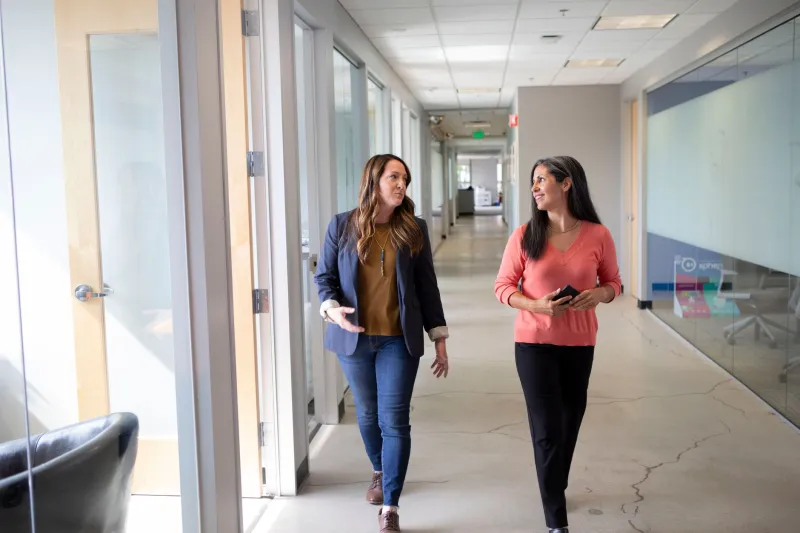
It usually started with something small. You were carrying too many files. Someone held a door. They asked how the Hendricks account was going. You said something honest instead of something polished. They said something back that you didn't forget for twenty years.
That was mentorship for most of American professional history. Not a program. Not a quarterly one-on-one. Not a LinkedIn connection request followed by a carefully worded message about being inspired by someone's journey. Just proximity, repetition, and the occasional moment when someone who knew more than you said something that actually landed.
When Careers Were Built in the Margins
For much of the twentieth century, professional development in America happened informally and constantly. Offices were physical places where people spent eight to ten hours a day in close quarters with colleagues at every level. There was no remote work, no asynchronous communication, no digital buffer between you and the person three desks over who'd been doing your job for fifteen years.
You watched how senior people handled difficult clients. You overheard negotiations you weren't supposed to hear. You got pulled into a meeting because someone was out sick and ended up learning more in two hours than you had in the previous six months. The knowledge transfer wasn't structured — it was ambient.
Tradespeople operated on an even more explicit version of this. The apprenticeship model that governed skilled trades for generations was built entirely around informal transmission of expertise. You showed up, you watched, you tried, someone corrected you, you tried again. The master electrician or the senior carpenter didn't hand you a training manual. They just let you work beside them until you understood things that couldn't be written down.
Professional offices worked similarly, if less formally. The junior associate who stayed late and ended up talking through a case with a senior partner. The new salesperson who got invited to a client lunch and spent three hours watching how a veteran read a room. These weren't programs. They were just what happened when you put people together in the same physical space day after day.
The Formalization of Something That Used to Be Free
At some point — and it's hard to pinpoint exactly when — organizations decided that informal mentorship was too unpredictable and too unevenly distributed to rely on. They weren't entirely wrong. The old system worked well for people who happened to be in the right place at the right time, who looked like the people above them, who were comfortable inserting themselves into conversations, who had the social capital to get noticed.
For everyone else, it could be nearly invisible. Women who were excluded from after-work drinks where the real conversations happened. Employees of color who never quite got pulled into the informal networks that distributed opportunity. First-generation professionals who didn't know the unwritten rules well enough to navigate them.
So companies built structures. Formal mentorship programs with matched pairs and scheduled check-ins. Leadership development curricula with defined competency frameworks. HR platforms where you could request a mentor the way you'd submit a vacation request. LinkedIn turned the whole thing into a scalable, searchable, quantifiable network.
In theory, this was democratization. And in some genuine ways, it was.
What the Calendar Invite Can't Replicate
But something got lost in the formalization, and people who've worked across both eras tend to feel it.
The hallway conversation worked partly because it wasn't a hallway conversation. It was a real exchange between two people who'd built a relationship through dozens of smaller interactions — shared lunches, adjacent desks, years of nodding to each other every morning. The advice landed because it came from someone who actually knew you. Not your career goals as stated in a mentorship intake form. You.
Formal mentorship programs often struggle to replicate that. Matched pairs who have nothing in common beyond organizational proximity can produce perfectly adequate scheduled meetings that neither party finds particularly useful. The mentee prepares questions. The mentor offers frameworks. Everyone fulfills the obligation and goes back to their day.
There's also something about the spontaneous nature of the original model that made it particularly effective. The best career advice tends to arrive when you're not expecting it — when you say something unguarded and someone responds to the real problem underneath it, not the polished version you'd have presented in a formal setting. Scheduling that is almost a contradiction in terms.
The Remote Work Complication
The shift toward remote and hybrid work has accelerated a trend that was already in motion. When you're not physically present with colleagues, the ambient knowledge transfer that used to happen automatically simply doesn't. You don't overhear the difficult client call. You don't watch how someone handles a tense meeting. You don't get pulled into things by proximity.
Organizations are scrambling to compensate — virtual coffee chats, structured shadowing programs, digital mentorship platforms. Some of it works. But there's a real concern among managers and researchers that early-career workers in remote environments are developing more slowly than their in-office counterparts, not because they're less capable but because they're missing the constant low-level learning that used to happen just by being in the room.
The Thirty-Second Exchange Nobody Logged
Here's the thing about the hallway conversation that changed someone's career: it was never recorded. Nobody followed up with a survey. There was no mentorship platform to log the interaction in.
But decades later, the person who received it could still tell you exactly what was said, exactly where they were standing, and exactly how it changed the way they thought about their work.
That kind of impact is hard to engineer. You can build a program around it, match people algorithmically, create the calendar space, and provide the framework. What you can't manufacture is the moment when someone who's been watching you for a while decides — spontaneously, unremarkably, in passing — that you're worth a few honest words.
Some things scaled well into the modern era. That one is still working on it.