Two Rings and the Whole Street Knew: The Telephone Tree That Held Neighborhoods Together
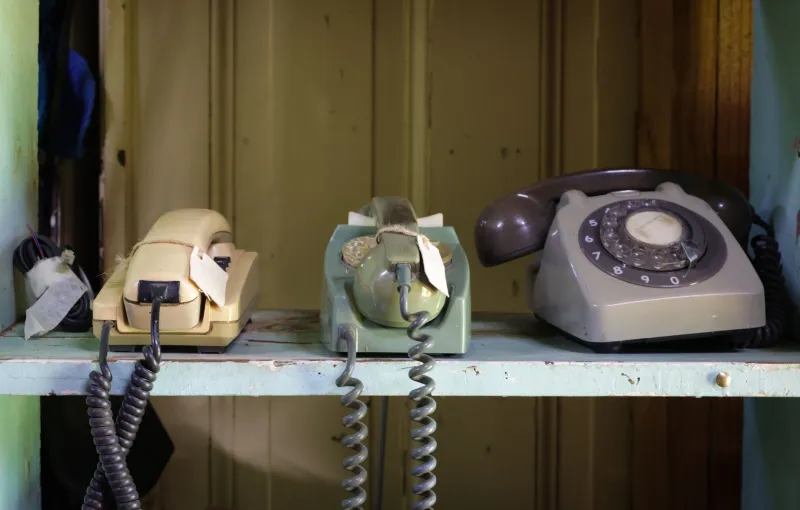
Somewhere, probably in a kitchen junk drawer, there was a list. A handwritten or mimeographed sheet of names and phone numbers, organized in a branching pattern that looked a little like a family tree and functioned like a small, analog communications network. At the top: one name. Below it: two names. Below each of those: two more.
This was the telephone tree, and for several decades of American life, it was how communities talked to themselves.
School cancellations. Church suppers called off on account of weather. Neighborhood watch alerts. PTA meeting reschedules. Block party logistics. Emergency announcements of all kinds. None of this required a mass email, a Facebook group, or a Nextdoor notification. It required one person making two phone calls, and trusting that the chain would hold.
It usually did. And the fact that it did tells you something important about what American neighborhoods once were.
How the Chain Actually Worked
The mechanics were simple, which was the whole point. The person at the top of the tree — usually a room parent, a church secretary, a block captain, or just whoever had volunteered — received the news first and made the initial calls. Each person they contacted was responsible for calling two or three others on the list, who were each responsible for calling two or three more. Within an hour or two, a message could travel through an entire school district or congregation without anyone having to make more than a handful of calls.
The lists were maintained carefully, updated when families moved in or out, passed down when the original organizer stepped back. In some communities, they were laminated. In others, they were taped to the refrigerator for years, the paper yellowing at the edges, certain numbers crossed out and rewritten in different ink as the neighborhood slowly changed.
The system had obvious limitations. It was only as reliable as its weakest link. If someone wasn't home — no answering machine, no voicemail, just an unanswered ring — the chain broke, and everyone below that person on the list might never get the message. There were backup protocols, workarounds, people who knew to call the next name down if they couldn't reach their assigned contact. It required maintenance, attention, and a shared commitment to keeping the whole thing functional.
In other words, it required community.
What the Tree Actually Asked of People
This is the part that gets lost when we think about telephone trees purely as a communication technology. They weren't just a method of passing information. They were a structure built on mutual obligation.
To be part of a telephone tree was to accept a small but real responsibility to your neighbors. You were a link in the chain. If you dropped the call, if you forgot, if you decided it wasn't your problem, the people below you didn't find out that school was closed. Their kids showed up to an empty building. Their Sunday morning was wasted. The system only worked if everyone in it took their role seriously.
That kind of low-level civic responsibility — not dramatic, not heroic, just reliably showing up for the small things — was woven into the fabric of how mid-century American communities operated. You knew your neighbors well enough to have their phone numbers. You were trusted to relay accurate information without editorializing. You answered the phone when it rang, because someone might need to reach you.
These seem like small things. They weren't.
The Intimacy of the Handwritten List
There's something worth pausing on in the physical object itself. A telephone tree list was a document of connection. Every name on it was a person you were linked to, however loosely — a neighbor, a fellow parent, a congregation member, someone whose kid was in your kid's class. The list represented a network of relationships that existed in real space, on real streets, between people who recognized each other at the grocery store.
Compare that to a Nextdoor notification or a neighborhood Facebook group, where the same information can reach thousands of people simultaneously and anonymously. The efficiency is incomparable. But so is the distance. You don't need to know your neighbor to be in the same app. You don't need to trust them, or feel responsible to them, or feel responsible for them. You just need to have the same zip code.
The telephone tree required something more. It required you to know who lived on your block and to feel, in some modest but genuine way, that their knowing what you knew mattered.
When the Chain Went Quiet
The telephone tree didn't disappear overnight. It faded gradually, through the 1990s and into the early 2000s, as email lists took over for schools and churches, as automated phone systems could dial entire districts at once, as texting made one-to-many communication instant and effortless. By the time smartphones were ubiquitous, the telephone tree was already a relic — something your parents mentioned with mild nostalgia, if they mentioned it at all.
What replaced it is objectively faster and more reliable. A school district can now notify every family of a snow day in the time it once took to make two phone calls. Nobody would argue for going back.
But the telephone tree wasn't just a notification system. It was a reminder, built into the structure of daily life, that you were part of something — a block, a school community, a congregation — and that being part of it meant doing your small piece. The chain held because people held it.
When mass communication made the chain unnecessary, we didn't lose the information flow. We lost the reason to be a link.