When the Weatherman's Guess Was Your Only Guide
When the Weatherman's Guess Was Your Only Guide
There was a time—not that long ago—when planning your week meant tuning in at a specific hour to watch a man in a suit point at a map and make an educated guess about the next seven days. If you missed that broadcast, you were out of luck. The weather wasn't something you could check whenever you wanted. It was announced, ceremonially, once or twice a day, often with a confidence that had no real basis in meteorological certainty.
Your entire weekend hung on what that weatherman said. If he predicted clear skies, you committed to the picnic. If he hinted at rain, you made backup plans. And if he was spectacularly wrong—which happened frequently enough that people developed a running skepticism about the profession—well, you just got wet.
The Almanac Era
Before television, Americans relied on printed almanacs, local radio bulletins read by announcers who often had no meteorological training whatsoever, and the wisdom of long-term observation. Farmers studied cloud formations. Sailors watched the horizon. Regular people kept weather diaries, trying to spot patterns that might repeat year after year.
The Farmer's Almanac, first published in 1818, became a trusted household reference not because it was accurate, but because it was consistent and available. People could at least plan around its predictions, even if those predictions were frequently wrong. What mattered was that uncertainty had been given a shape, a voice, an authority figure.
When commercial radio arrived in the 1920s, weather forecasts became daily events. Stations hired people—often with minimal meteorological background—to read weather observations and make predictions. The format was simple: here's what we know, here's what we think will happen. Take it or leave it.
Television Made Weather Theatrical
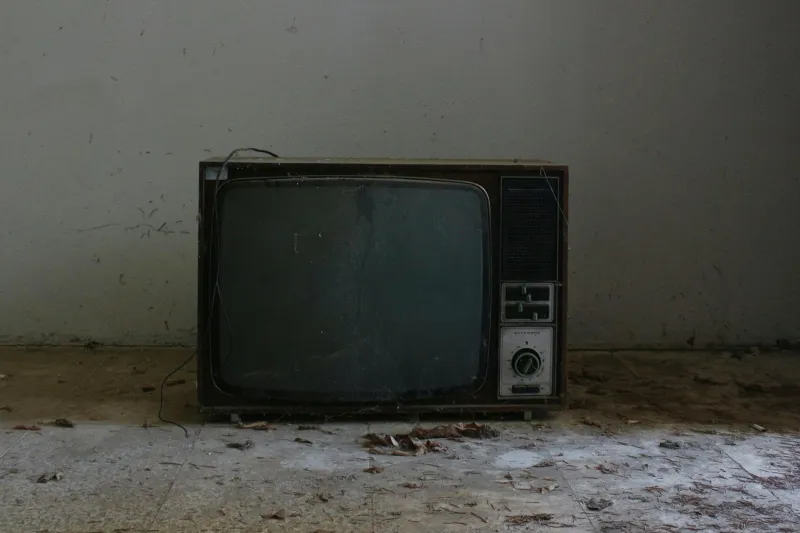
Television transformed weather forecasting from an informational bulletin into something closer to entertainment. The weatherman became a local celebrity. He had a personality, a manner, a reputation for accuracy or colorful wrong guesses. In many American cities, the weatherman was as recognizable as the evening news anchor, and his performance—the way he moved across the weather map, the confidence in his voice, his folksy interpretations—became part of the evening ritual.
But even as technology improved through the mid-20th century, weather forecasting remained fundamentally limited. Meteorologists could predict maybe three days out with reasonable confidence. Beyond that, it was educated guesswork. A five-day forecast was considered ambitious. A ten-day forecast was essentially fiction.
This meant that big decisions—whether to schedule an outdoor wedding, plan a camping trip, or even decide what crops to plant—carried genuine weather risk. You couldn't know. You could only guess, based on what the weatherman guessed, based on what the weather models guessed.
The Invisible Revolution
Somewhere between the 1990s and the early 2000s, this entire system evaporated so quietly that most people never noticed it disappearing.
Satellite technology, computerized weather modeling, and the internet created a world where weather information became abundant, granular, and instantly accessible. You didn't have to wait for the evening forecast anymore. You could check the weather on your computer whenever you wanted. Then your phone. Then your watch. Then your car dashboard.
But more importantly, the accuracy improved dramatically. Meteorological forecasting became genuinely scientific. A five-day forecast today is roughly as accurate as a one-day forecast was in 1980. We can now predict weather patterns with a precision that would have seemed like magic to someone from the 1960s.
The weatherman as a cultural figure largely vanished. Weather became something you retrieved, not something that was announced to you. It became data, not narrative.
What We Lost
There's something worth noticing about what changed when weather forecasting became invisible and accurate. The nightly forecast was a ritual. Families gathered around the television. The weatherman's personality mattered. There was an element of human interpretation, of regional knowledge, of someone trusted translating meteorological data into practical advice for your specific circumstances.
Now, weather is purely informational. You pull up an app, see a percentage chance of rain, and make your decision. It's more efficient. It's more accurate. But it's also more solitary and more abstract.
We've also lost the experience of genuine uncertainty about something as fundamental as whether it will rain. Modern life has systematized away the guesswork. We've traded the drama of the weatherman's forecast for the comfort of knowing, with reasonable certainty, what the next 14 days will bring.
That trade-off has been unambiguously good for logistics, agriculture, and event planning. But it's also removed a category of acceptable unpredictability from American life. We used to plan knowing that we might be wrong. We used to make decisions with incomplete information as a normal condition of existence.
Today, if we get caught in unexpected rain, it feels like a breach of contract. The weatherman didn't do his job. The app failed us. The forecast was wrong.
It's remarkable how quickly that shifted. Someone born in 1950 lived through a world where weather was mysterious and announced, to a world where it's predictable and on-demand. Someone born in 1990 has never known anything but weather on their terms, checkable anytime, accurate enough to plan around.
The nightly forecast ritual is gone. The weatherman as trusted local figure is nearly extinct. And we've gained an enormous amount of practical certainty in exchange.
But that certainty came at a cost we rarely acknowledge: we've lost the experience of making important decisions while genuinely uncertain about what the sky would do.