When Everyone on Your Block Was Family: The Vanishing Art of Knowing Your Neighbors
When Everyone on Your Block Was Family: The Vanishing Art of Knowing Your Neighbors
Picture this: It's 1963 in suburban Cleveland. Mrs. Henderson from next door drops by with a casserole dish she's returning, stays for coffee, and mentions that the Johnsons at the end of the block are looking for someone to watch their kids Saturday night. By evening, half the neighborhood knows about the babysitting gig, and someone's teenage daughter has already claimed it.
This wasn't unusual. This was Tuesday.
Today, that same interaction would require three different apps, two Facebook groups, and probably a background check. Most likely, it wouldn't happen at all.
The Architecture of Connection
American neighborhoods weren't accidentally social in the mid-20th century—they were designed that way. Houses sat close to the street with large front porches and picture windows facing outward. The message was clear: life happened in public view.
Front porches served as the neighborhood's informal communication network. Mothers shelled peas while keeping an eye on children playing in the street. Fathers watered lawns and discussed baseball scores with passing neighbors. Evening porch-sitting was so common that real estate listings actually advertised "good porch potential."
Contrast this with today's suburban architecture: houses pushed back from the street, garage doors facing forward like blank walls, and windows positioned for privacy rather than community viewing. We literally built ourselves into isolation.
The Daily Rhythm of Borrowed Sugar
In 1950s America, running out of sugar meant a quick trip next door, not a drive to the grocery store. This constant micro-borrowing—a cup of flour, a screwdriver, jumper cables—created an intricate web of small favors that bound neighborhoods together.
Children moved freely between houses, with multiple adults serving as informal supervisors. "Mrs. Peterson's watching you" wasn't a threat—it was Tuesday afternoon childcare. Summer evenings featured impromptu block parties as families dragged lawn chairs into driveways and let conversations stretch past sunset.
Neighbors knew each other's schedules, preferences, and problems. They watered plants during vacations, accepted packages, and noticed when someone was sick. This wasn't nosiness—it was the social safety net that existed before professional services filled every gap.
The Great Retreat Indoors
The decline began with air conditioning. As homes became climate-controlled, windows stayed closed and porch-sitting became uncomfortable compared to cool indoor spaces. Television provided entertainment that didn't require leaving the house or talking to anyone.
The 1970s brought privacy fences—six-foot barriers that literally blocked the neighborly conversations that once happened across backyard clotheslines. Backyards became private sanctuaries rather than semi-public spaces where children played together and adults chatted while hanging laundry.
Two-car garages completed the transformation. Families could arrive home, press a button, and disappear into their houses without encountering a single neighbor. The garage door became a portal between public and private life, eliminating those crucial moments of casual contact.
Technology's Quiet Revolution
By the 1990s, technology was quietly replacing neighborhood connections. Need a babysitter? There's a service for that. Lawn mower broken? Call a repair shop instead of asking Bob next door. Planning a block party? Most people don't have their neighbors' contact information anyway.
Online communities promised to enhance local connections but often replaced them instead. Why chat with the person next door when you can join a Facebook group with people who share your exact interests? Virtual neighborhoods felt safer, more convenient, and infinitely more curated than the messy reality of geographical proximity.
The Cost of Privacy
Modern surveys reveal the extent of our neighborhood anonymity. More than half of Americans can't name a single neighbor. In apartment buildings, people live inches apart yet remain complete strangers. Emergency situations regularly reveal that neighbors don't even know if elderly residents live alone.
This isolation has measurable health consequences. Studies link neighborhood social connections to longer lifespans, better mental health, and faster recovery from illness. The casual support network that once existed—someone to check on you when you're sick, help with minor emergencies, or simply provide daily human contact—has largely vanished.
What We Traded Away
The shift toward privacy and convenience wasn't inherently wrong, but it came with unexpected costs. We gained climate control, entertainment options, and personal space. We lost the daily interactions that once made neighborhoods feel like extended families.
Today's parents often don't know which houses have children their kids' age. Elderly residents can go days without speaking to another person. Young professionals move into neighborhoods and never learn their neighbors' names, treating residential areas like anonymous hotels rather than communities.
The Ripple Effects
The decline of neighborhood connections has rippled through American society in ways we're only beginning to understand. Local political engagement has dropped as people lose investment in their immediate surroundings. Community institutions—from PTAs to local volunteer groups—struggle to find participants.
Even our language has changed. "Neighborhood watch" now refers to security cameras rather than neighbors actually watching out for each other. "Good fences make good neighbors" has become gospel, when once the absence of fences made better neighbors.
Looking Back, Moving Forward
The transformation happened gradually enough that most people didn't notice it occurring. One day we lived in communities where borrowing a cup of sugar was normal; the next, we lived among strangers who happened to share the same zip code.
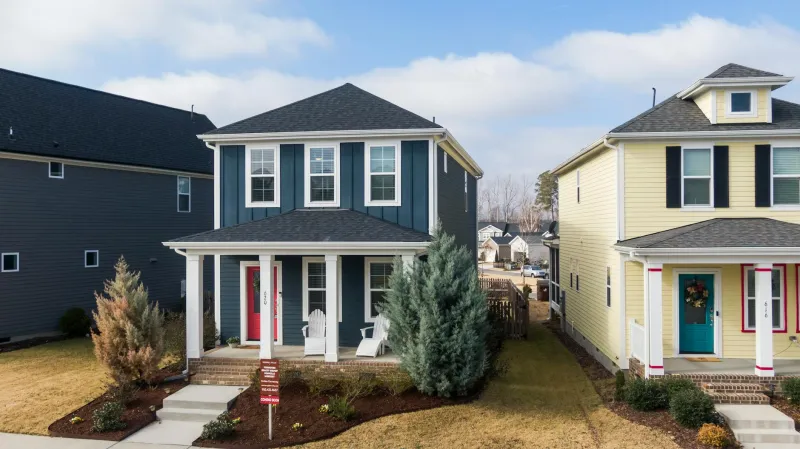
Some newer developments are experimenting with "new urbanist" designs that encourage interaction—front porches, narrow streets, shared green spaces. But changing architecture is easier than changing culture. The habits of connection, once broken, prove remarkably difficult to rebuild.
The America where everyone knew their neighbors wasn't perfect—it could be intrusive, judgmental, and exclusionary. But it provided something we're still learning to live without: the simple human comfort of being known by the people who live closest to us.
In our rush toward privacy and convenience, we may have traded away something more valuable than we realized: the feeling of belonging somewhere, to someone, even on an ordinary Tuesday.