When Getting Lost Was a Skill You Had to Master
When Getting Lost Was a Skill You Had to Master
Picture this: You've just driven eight hours to a city you've never visited before. It's 1995, and you're sitting in your car at a gas station, unfolding a paper map that's roughly the size of a tablecloth. The creases are worn from previous trips, and you're trying to figure out where exactly you are while other drivers wait behind you for the pump.
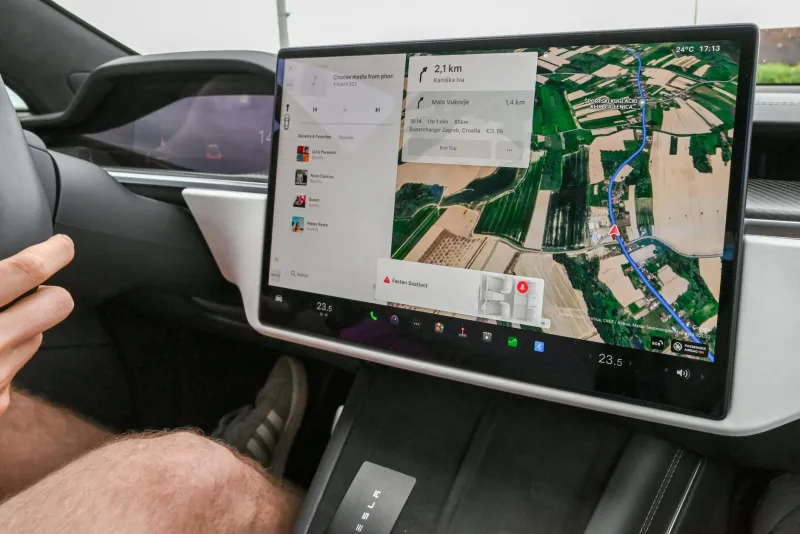
This was navigation before the blue dot. Before turn-by-turn directions. Before the comforting voice that tells you to "turn right in 500 feet." This was when getting somewhere new required actual skill.
The Ritual of Paper Maps
Every road trip began the same way: a pilgrimage to AAA or the local gas station to collect maps. These weren't just pieces of paper—they were survival tools. The smart traveler would highlight their route in yellow marker, noting highway numbers and major landmarks. They'd fold the map to show just the relevant section, creating a portable command center for the passenger seat.
But maps only got you so far. Once you exited the highway, you entered a different realm entirely. Street-level navigation meant deciphering a maze of residential roads, one-way streets, and poorly marked intersections. You'd pull over constantly, reorienting the map, trying to match the abstract lines to the real world around you.
The passenger became the navigator, a role that required constant attention and occasional diplomatic skills when the driver inevitably blamed them for a wrong turn. "I said left at the church, not the school!" These were the moments that tested relationships and taught Americans to communicate under pressure.
The Art of Asking for Directions
When maps failed—and they often did—you had to talk to strangers. This meant developing a particular social skill that barely exists today: the ability to approach someone on the street and extract useful geographic information.
Gas station attendants became unofficial city guides, sketching routes on napkins and offering local shortcuts. "Take Main Street until you see the big Texaco sign, then hang a right. Can't miss it." These hand-drawn directions were treasures, folded carefully and consulted repeatedly until you reached your destination.
The quality of directions varied wildly. Some people were natural guides, offering precise landmarks and estimated travel times. Others would send you on elaborate detours through their favorite parts of town, or worse, give confident directions to places they'd never actually been.
Building Spatial Intelligence
Without GPS, travelers developed an intuitive sense of direction that modern Americans rarely need. You learned to read the sun's position, to notice the flow of traffic patterns, to recognize when you were heading toward or away from a city center. Downtown areas had a gravitational pull you could feel—more lanes, taller buildings, heavier traffic.
You memorized landmarks not because you wanted to, but because you had to. The red brick church on the corner. The distinctive water tower. The shopping plaza with the giant cowboy sign. These became your breadcrumbs, marking the path back to familiar territory.
This spatial awareness extended beyond driving. Walking through a new city meant constantly updating your mental map, noting cross streets and memorable storefronts. Getting lost on foot was a more serious problem—there was no air conditioning, no radio, and definitely no way to call for backup.
The Anxiety and the Satisfaction
Navigating without GPS carried a low-level stress that today's travelers can barely imagine. Every unfamiliar exit ramp was a potential mistake. Running late meant genuine panic, because there was no way to recalculate your route or find a faster alternative. You were committed to your chosen path, for better or worse.
But when you successfully navigated to a new destination using only paper and instinct, the satisfaction was real. You had conquered geography through preparation and skill. You knew the route intimately because you had actively participated in finding it. The city felt less foreign because you had worked to understand its layout.
What We Gained and Lost
Today's navigation is undeniably better in almost every practical way. GPS prevents countless hours of frustration, reduces fuel waste from wrong turns, and makes travel accessible to people who might never have attempted it before. You can explore with confidence, knowing that your phone will always guide you home.
But something subtle disappeared when the blue dot appeared on our screens. We became passengers in our own journeys, following instructions rather than making decisions. The mental maps that previous generations built through trial and error never formed in our minds.
Modern travelers often arrive at destinations without understanding how they got there. They couldn't retrace their route without GPS assistance, and they miss the small details that paper-map navigation forced you to notice. The struggle of finding your way, it turns out, was also the process of truly learning a place.
The End of an Era
The last generation to navigate by paper and instinct didn't know they were part of a ending tradition. They were simply trying to get from point A to point B with the tools available to them. But in doing so, they developed a relationship with geography that smartphone users will never experience.
Getting lost was once a rite of passage, a skill that separated confident travelers from timid ones. Now it's just a temporary inconvenience, resolved with a few taps on a screen. We gained efficiency and convenience, but we lost the quiet pride that came from finding our own way through an unfamiliar world.