You Got Twenty-Four Shots and You'd Better Mean Every One of Them
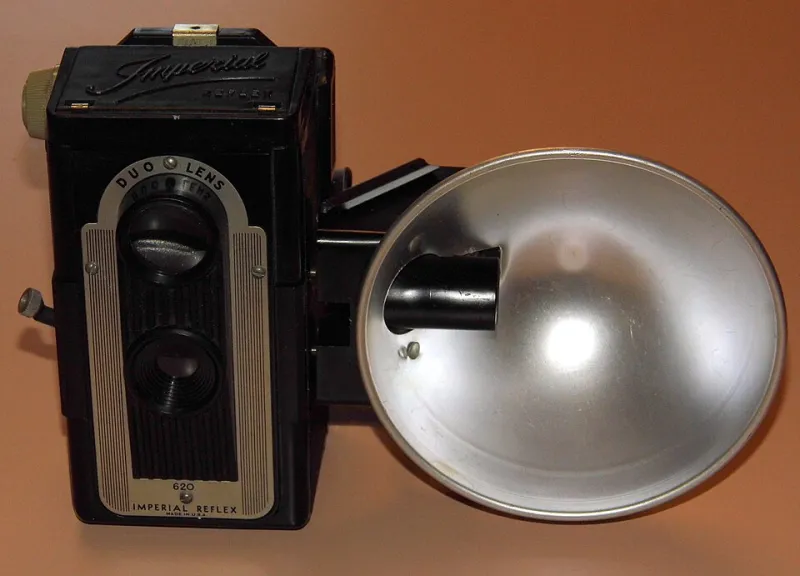
Photo: Joe Haupt from USA, CC BY-SA 2.0, via Wikimedia Commons
Somewhere in a shoebox in a closet, there's a photograph of a birthday party from 1987. The cake is slightly out of focus. Someone is mid-blink. The flash has turned everyone's eyes an unsettling shade of red. It's not a good photograph by any technical measure. But it's the only one from that birthday, so it's the one the family kept. And because it's the only one, it has become, over the decades, irreplaceable.
That's the world film photography made. A world where every frame carried weight.
The Economics of the Shutter Click
A standard roll of 35mm film gave you twenty-four or thirty-six exposures. That was it. When you reached the end of the roll, the camera was done until you loaded a new one — which cost money. And developing the film cost more.
In the mid-1980s, a roll of Kodak film ran about $3 to $4. Developing and printing at a one-hour photo lab could add another $8 to $12. So each photograph, from shutter click to printed image, cost somewhere between 30 and 50 cents in real terms — closer to a dollar in today's money. Multiply that across a year of casual shooting and you were spending real household budget on pictures.
The result was a kind of natural curation. You did not photograph your lunch. You did not photograph the same moment from six different angles to pick the best one later. You composed the shot in your head, you raised the camera, you pressed the button, and you committed. The photograph was made in that moment, not assembled afterward from a hundred attempts.
The Long Wait Between Click and Memory
And then you waited. Sometimes days, sometimes weeks.
If you were on vacation, you shot your film and brought it home undeveloped. The photos from your trip to Yellowstone might not exist as physical objects until three weeks after you returned. When you finally picked up the envelope from the drugstore counter, you were essentially meeting your memories again for the first time — the scene as you'd tried to capture it, filtered through a machine you'd never seen, printed by someone who had no idea what they were looking at.
Sometimes the reunion was perfect. A sunset came out exactly as it had felt standing there. A child's expression was caught just right. Other times, the whole roll was a quiet disaster — overexposed, underexposed, blurred, or simply not what you'd hoped. You couldn't go back. The moment was gone. You kept the photo anyway, or you didn't, and either way that chapter closed.
This delay did something interesting to memory. The photograph wasn't a real-time record. It was a letter from your past self, arriving late. The gap between experience and image gave both of them a kind of independence from each other.
What Scarcity Made Us Do
Because film was finite and developing cost money, families made deliberate choices about what deserved to be documented. Birthdays. Holidays. First days of school. Graduations. Vacations. The big, agreed-upon moments of a life. Ordinary Tuesdays were not photographed, because ordinary Tuesdays did not justify the expense.
This meant the photographic record of an American family in, say, 1975 was a curated highlight reel — not by design, but by economic necessity. Albums were coherent. They told a story with a clear shape: here is this family, at these moments, in these years. The gaps between photos were filled in by memory and imagination rather than documentation.
Professional photographers understood this scarcity intuitively. Ansel Adams famously said that twelve significant photographs in a year was a good haul. The discipline of the limited frame forced attention, patience, and craft. You learned to see before you shot.
The Flood That Followed
The first consumer digital cameras appeared in the mid-1990s, but it was the arrival of the smartphone camera — particularly after the iPhone launched in 2007 — that fundamentally changed the relationship between humans and photographs.
The numbers are staggering. In 1985, Americans took roughly 12 billion photographs in a year. In 2024, estimates suggest over 1.8 trillion photos are taken globally each year — a number so large it barely registers as meaningful. The average smartphone user takes somewhere between 700 and 1,500 photos annually. Storage is essentially free. Deletion is instant. The cost of a single image is effectively zero.
We photograph everything now. The meal before we eat it. The sky on an unremarkable Wednesday. The face of someone we love, over and over, in slightly different light. We take ten shots of the same moment and keep the best two, discarding the rest without a second thought. The friction is gone.
What We Gained, What We Gave Away
The gains are real and worth naming. We have access to our memories in a way no previous generation did. A parent today can document their child's first steps, first words, first everything, in high-definition video and crystal-clear photographs, stored in the cloud, retrievable forever. That's genuinely extraordinary.
But something shifted in how a photograph feels. When every moment is captured, no single image carries the same gravity. The photograph of that blurry 1987 birthday cake is precious partly because it's the only one. It had to work harder to earn its place in the shoebox.
Today's photographs live in libraries of thousands, scrolled past at speed, rarely printed, often never looked at again. We are documenting our lives at a scale that no human nervous system can actually process. The images accumulate faster than meaning can attach to them.
The old rolls of twenty-four forced a question that no one asks anymore: Is this moment worth a photograph? The answer, when you had to mean it, was usually no. Which made the yes feel like something.