The Wooden Drawers Full of Everything Anyone Had Ever Written Down
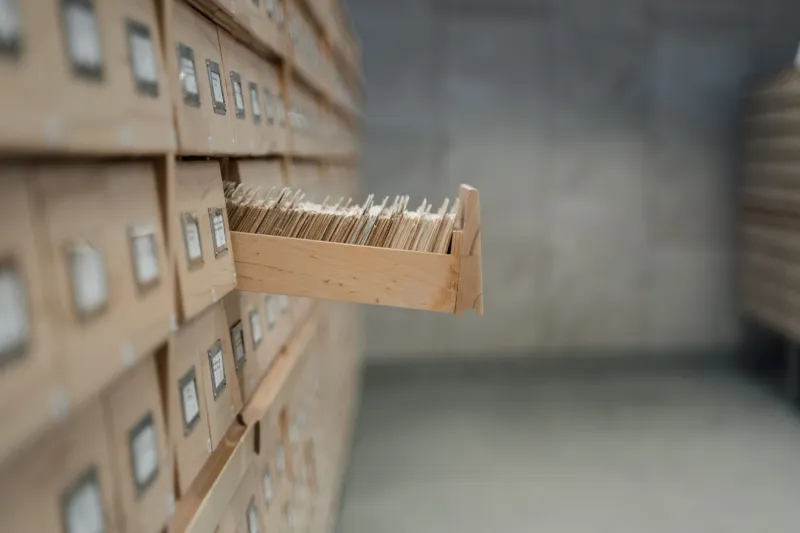
If you went to school before the mid-1990s, there was probably a moment in your library education when a teacher or librarian stood you in front of a long wooden cabinet — waist-high, stretching across an entire wall, fitted with dozens of small brass-handled drawers — and explained that everything in this building was organized inside it. Every book. Every topic. Every author who had ever published something that your library owned.
This was the card catalog. And learning to use it wasn't optional.
A System Built on Patience and Cross-Reference
The catalog worked on a principle that sounds simple until you actually try to use it: every book in the library was represented by at least three separate index cards, each filed in a different drawer. One card was alphabetized by the author's last name. One was filed under the book's title. And one — sometimes several — was filed under the subject or subjects the book addressed.
In theory, you could find anything from any direction. In practice, it required a kind of structured lateral thinking that took real time to develop. If you were researching the Civil War for a history paper, you didn't just search "Civil War." You searched Civil War — Campaigns, Civil War — Economic Causes, Civil War — Personal Narratives, and a dozen other subdivisions that the Library of Congress Subject Headings — a thick, intimidating reference volume of its own — had deemed the correct terminology. If you guessed wrong on the subject heading, you found nothing, and you had to start over.
 Photo: Civil War, via myanmar.com
Librarians were essential to this process in a way that has no modern equivalent. They weren't just people who checked out books — they were navigators of a system complex enough to defeat a reasonably intelligent adult without guidance. "What subject heading would this be under?" was a question asked seriously, by serious researchers, at reference desks across the country every single day.
The Physical Act of Looking
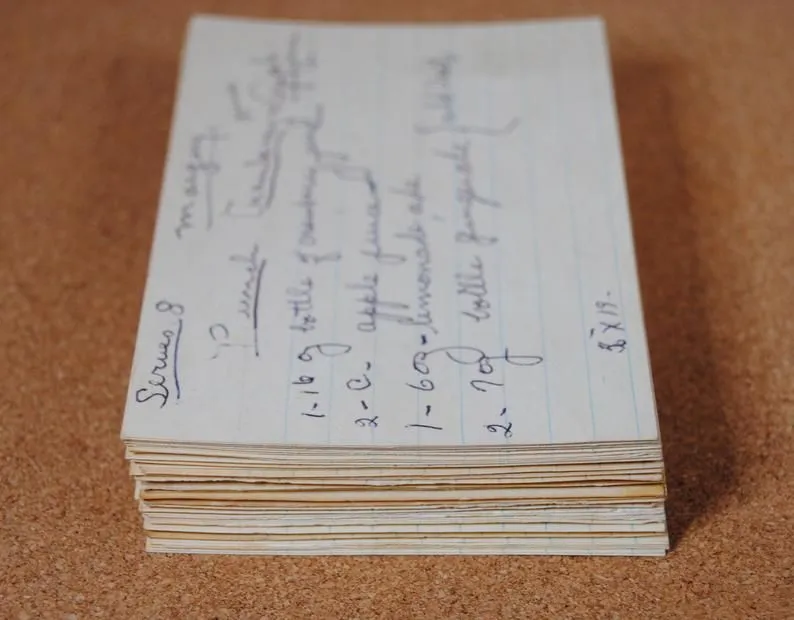
There was a tactile experience to card catalog research that's genuinely difficult to describe to anyone who didn't grow up with it. You pulled a drawer — it slid out on a smooth wooden track, held by a metal rod running through holes in each card to keep everything in order — and you rifled through. The cards were thick, slightly yellowed at the edges of older ones, typed on manual typewriters with occasional hand-corrections in pencil or ink. Some were pristine. Some were dog-eared from decades of fingers flipping past them.
You read each card carefully. Call number in the upper left corner. Author. Title. Publisher, year, page count. And at the bottom, sometimes, a line that was almost its own small discovery: See also: followed by related subject headings that might lead somewhere useful. That line was the closest thing the card catalog had to a hyperlink — a pointer toward adjacent knowledge that you had to physically go find.
When you located a card that looked promising, you copied the call number onto a small slip of paper — libraries kept pads of them near the catalog for exactly this purpose — and walked into the stacks to find the actual book. The stacks were their own navigational challenge: the Dewey Decimal System arranged books by number in a sequence that required its own learning curve, and the book you were looking for had a habit of being checked out, misshelved, or simply not where the card said it should be.
 Photo: Dewey Decimal System, via i.pinimg.com
What the Search Actually Taught You
Here's the thing about a research process that required this much effort: it made you think before you searched. You didn't look things up casually. You formed a question, considered how it might be categorized, identified the vocabulary the catalog would recognize, and committed to a direction before you opened a single drawer. The friction wasn't incidental — it was, in retrospect, a kind of cognitive warm-up that shaped how you approached the information you eventually found.
Teachers and librarians of that era often described something that research psychologists would later formalize: the act of working harder to find information made students more likely to retain and engage with it. When you spent forty-five minutes tracking down a source, you read it carefully. You took notes. You didn't skim it and close the tab. There were no tabs.
There was also a particular satisfaction — almost a small triumph — in successfully navigating the system. Finding the right subject heading after two failed attempts. Locating a call number in the stacks after walking three aisles in the wrong direction. Pulling a book from the shelf and finding, on page 112, exactly the passage you needed. It felt earned in a way that a list of search results does not.
The Day the Drawers Closed
Most American public libraries began transitioning to computerized catalogs through the late 1980s and into the '90s, with many completing the shift by the turn of the millennium. The physical card catalogs were retired — some were donated to schools, some were repurposed as storage furniture, some were simply discarded. The brass-handled drawers, the typed index cards, the See also lines in faded ink: gone.
What replaced them was objectively better in almost every technical sense. Online catalogs searched all three entry points simultaneously. They could be accessed from home. They showed real-time availability. They linked to digital resources the card catalog could never have anticipated. And then Google arrived, and the question of how to find information was transformed so completely that the card catalog became not just obsolete but almost unimaginable to anyone who grew up after it.
Today a student researching the Civil War types three words and receives ten thousand results in a fraction of a second. The information is more comprehensive, more current, and infinitely more accessible than anything a card catalog could have offered.
What's harder to measure is what happened to the research instinct itself — the habit of forming a careful question before seeking an answer, of following a chain of cross-references through unfamiliar territory, of sitting with the uncertainty of not immediately knowing and working methodically toward knowing anyway.
The wooden drawers are gone. The brass handles are in antique shops. And somewhere in the drift between then and now, a particular kind of thinking went with them.