Once a Month, a Stranger Walked Your Yard — And That Was Completely Normal
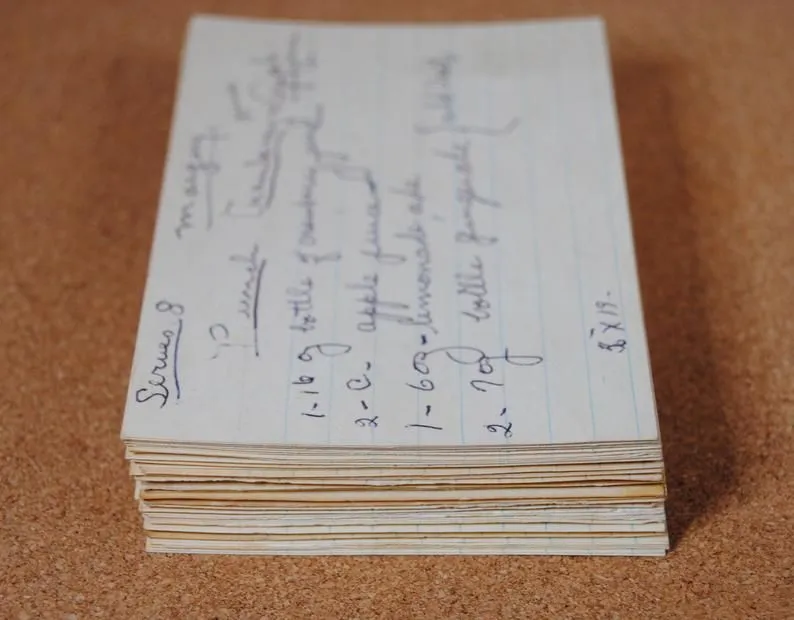
Somewhere in a box of old utility bills, if your family kept that kind of thing, there might be a paper statement with a handwritten number in the consumption column — the actual notation of a person who walked to the side of your house, opened a small metal door, leaned in, and copied five digits onto a form. That was your electricity bill for the month. That was how it worked.
For most of Americans' lives with modern utilities — from roughly the 1920s through the early 2000s — the meter reader was as regular a presence in a neighborhood as the mail carrier or the garbage truck. Not quite invisible, not quite a familiar face, but somewhere in between: a person in a uniform with a clipboard who appeared once a month, moved through your property with quiet efficiency, and left without knocking.
The Route That Held a Neighborhood Together
Meter readers worked routes the way mail carriers did — the same streets, the same sequence of houses, month after month. Over time, they came to know a neighborhood the way few outsiders ever did. Not intimately, not socially, but observationally. They knew which yards had dogs. They knew which gates were latched on the left and which ones stuck. They knew the house on the corner that always had the lights on and the one that had been dark for three weeks.
That last detail mattered more than the utility companies may have fully appreciated at the time. Because the meter reader's route wasn't just a data-collection exercise — it was, quietly and without any formal mandate, a welfare check system for an entire layer of American households.
An elderly woman living alone whose consumption hadn't budged in six weeks. A meter that had been running backward, suggesting something had gone wrong with the wiring. A gate that used to be left open for the reader and now wasn't. These were observations that a diligent route worker might flag, mention to a supervisor, or in some cases report directly to a neighbor or local authority. Nobody assigned them this role. They just absorbed it over years of walking the same yards and paying attention.
The Bill in the Box
The paper bill itself was a different kind of artifact than today's emailed statement. It arrived in your mailbox — sometimes tucked under the door if the reader doubled as a delivery agent in smaller utility districts — and it told a physical story. Your consumption this month. Your consumption last month. A comparison that made sense to anyone who knew that January meant the furnace was running and July meant the air conditioning.
You could hold it. You could write on it. You could stick it on the refrigerator with a magnet if your bill was higher than expected and you wanted to remind yourself to turn off lights. The bill was a document that came from a person, reflected a reading a person had taken, and landed in your hands as a physical object. The transaction was simple and complete.
If the number seemed wrong — if your usage had spiked in a month when nothing unusual had happened — you called the utility company, and a person answered. They would note the discrepancy, sometimes send the reader back out for a verification reading, and issue a corrected bill if the original was wrong. It was slow. It was occasionally inaccurate. But it was a process you could trace from one human being to another.
When the Meters Got Smart
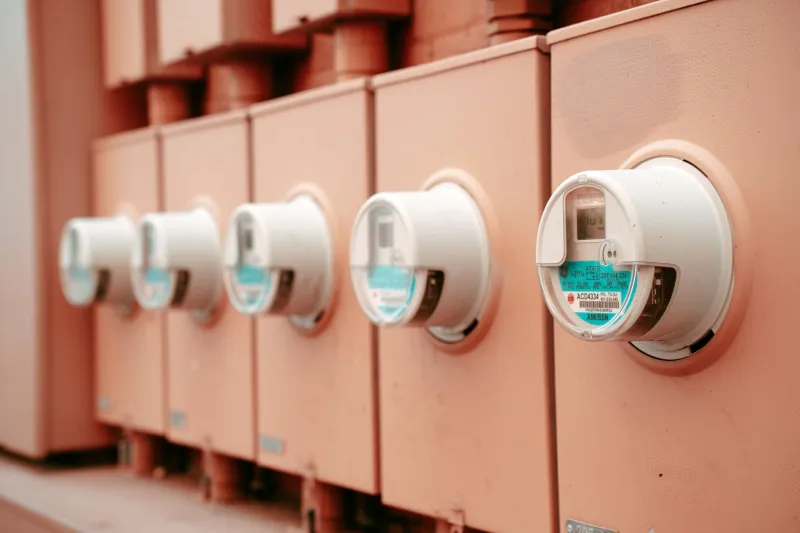
The rollout of smart meters across the United States accelerated through the 2000s and 2010s, and by most measures it was a straightforward improvement. Automated wireless readings eliminated billing errors caused by misread numbers. Consumption data became available in near real-time. Utilities could detect outages faster and respond more efficiently. Customers gained access to apps showing exactly how much electricity they'd used on any given hour of any given day.
The efficiency gains were real and significant. The meter reader's job — tens of thousands of positions across the country — quietly disappeared, absorbed into the infrastructure of digital automation. Routes that had been walked for decades were retired. The person who knew your gate was gone.
What replaced them was a system that knows far more about your household than any meter reader ever could — and knows none of it in a human way. Your smart meter can tell a utility company that your consumption pattern changed on a Tuesday afternoon in March. It cannot tell anyone that the lights in the back bedroom have been off for longer than usual, or that the gate that's always been left open is suddenly latched.
The Informal Safety Net We Didn't Know We Had
This is the part of the story that tends to get lost when we talk about smart grid technology and the benefits of automation. The meter reader wasn't just reading meters. They were, in aggregate, a distributed network of observant humans moving through residential neighborhoods on a regular schedule, noticing things that databases cannot notice.
Studies on social isolation — particularly among older Americans — have consistently found that the erosion of incidental human contact carries real consequences. The neighbor who used to wave from the porch. The mail carrier who noticed the uncollected mail. The meter reader who mentioned to a supervisor that something seemed off at number forty-two. These weren't formal social services. They were the connective tissue of a neighborhood that happened to be woven into the infrastructure of ordinary life.
That tissue didn't disappear all at once. It thinned gradually, as one routine human presence after another was replaced by a system that was faster, cheaper, and more accurate in every measurable way — except the ones we forgot to measure.
Your electricity meter is smarter now than it has ever been. It just doesn't walk your yard anymore.