When a Handshake Could Buy You a House: America's Era of Trust-Based Real Estate
When a Handshake Could Buy You a House: America's Era of Trust-Based Real Estate
Jim McKenna knew every family on Maple Street by their first names, their kids' ages, and exactly how much they could afford to spend on a house. As the town's only real estate agent in 1958, he didn't need credit reports or background checks. He had something better: thirty years of watching these families grow up, work hard, and keep their promises.
 Photo: Maple Street, via images.squarespace-cdn.com
When the Johnsons decided to sell their three-bedroom colonial, Jim already knew the perfect buyers. The young Kowalski family had been saving for two years, working double shifts at the plant. Jim had watched them scrimp, seen their character tested when times got tough. A twenty-minute conversation over coffee at Murphy's Diner was all it took to make the match.
 Photo: Murphy's Diner, via murphysdiner.com
"I'll give you $12,500," Stan Kowalski told Mrs. Johnson that Saturday morning. "I can put down $2,000 now and pay the rest over ten years."
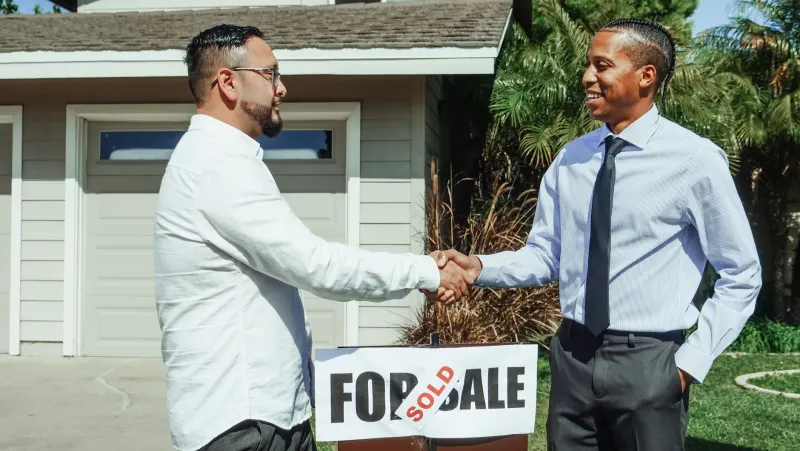
"That sounds fair," she replied. They shook hands. Jim wrote up a simple agreement on his letterhead. The house changed ownership that afternoon.
The Neighborhood Network That Made It Work
This wasn't recklessness—it was a system built on information that no algorithm could capture. Real estate agents like Jim weren't just salespeople; they were community historians. They knew who paid their debts, who helped neighbors in tough times, and whose word meant something when the chips were down.
The local banker, Tom Riley, had watched Stan Kowalski walk past his window every morning for five years, heading to work before dawn. He'd seen him at church, at Little League games, helping elderly neighbors with their groceries. When Jim brought the deal to the bank, Tom didn't need to run credit checks. He knew Stan's character better than any three-digit score could reveal.
 Photo: Little League, via c8.alamy.com
"The Kowalskis are good people," Tom would tell his wife that evening. "They'll make those payments even if it means eating beans for dinner."
The entire transaction—from handshake to house keys—took less than three weeks. No title insurance, no home inspections, no mortgage underwriters in distant cities making decisions based on spreadsheets. Just neighbors helping neighbors find homes, backed by the kind of social capital that accumulated over decades of shared community life.
When Everyone Knew Everyone's Business
This system worked because privacy was a luxury small-town America couldn't afford. Everyone knew everyone else's financial situation, work ethic, and family circumstances. The mailman knew who was behind on bills. The grocer extended credit based on reputation. The real estate agent was plugged into this network of informal information that made formal verification unnecessary.
When problems arose—and they did—the community handled them personally. If the Kowalskis hit a rough patch and missed a payment, Tom Riley didn't foreclose. He walked over to their house after work, sat at their kitchen table, and worked out a solution that kept the family in their home and the bank whole.
The Paperwork Revolution Changes Everything
By the 1970s, this intimate system was crumbling. Fair housing laws rightfully dismantled discriminatory practices, but they also formalized a process that had once run on relationships. Federal regulations demanded documentation, standardization, and objective criteria. The handshake deal became legally insufficient.
Credit scoring systems emerged in the 1980s, reducing complex human stories to three-digit numbers. Title insurance became mandatory, protecting against risks that local knowledge used to manage informally. Environmental assessments, property inspections, and mortgage underwriting guidelines turned home buying into a bureaucratic marathon.
Today's home purchase involves dozens of professionals who never meet the buyers face-to-face: underwriters in corporate offices, title companies processing hundreds of transactions daily, inspectors following standardized checklists. The average closing takes 45 days and requires a stack of documents two inches thick.
What We Gained and Lost
The modern system eliminated much of the discrimination and favoritism that plagued the old way. Minority families who were shut out of homeownership by informal networks now had legal protections and standardized criteria. Credit scoring, for all its flaws, was more objective than Jim McKenna's gut feeling about someone's character.
But something essential was lost in translation. Home buying became a financial transaction instead of a community milestone. The personal relationships that once guided families through the biggest purchase of their lives were replaced by disclosure forms and liability waivers. The local knowledge that prevented problems was substituted with insurance policies that paid for them after they occurred.
The Human Cost of Efficiency
Standing in a title company conference room today, signing document after document while a notary watches the clock, it's hard to imagine that Americans once bought homes the way they bought vegetables at the farmers market—through conversation, trust, and personal relationships built over years of shared community life.
The handshake deal that built entire neighborhoods has vanished, replaced by a system that's undoubtedly more fair and legally sound. But in gaining protection and standardization, we lost something harder to quantify: the feeling that buying a home meant joining a community that already knew your story and was invested in your success.
In 1958, when Stan Kowalski shook hands with Mrs. Johnson, he wasn't just buying a house. He was being welcomed into a neighborhood by people who had decided he belonged there. Today's homebuyers get legal protections and professional services. Whether they get that same sense of belonging is another question entirely.